Butyl Stearate in Polymer Processing: Ester Chemistry Basics
Foundational ester chemistry for new buyers
N-Butyl Stearate is used in polymer processing mainly as an internal lubricant: it lowers friction inside the polymer melt so the compound flows more easily through screws, dies and moulds. In PVC it is typically added at levels between 1% and 3%, and at those levels part of its effect also shows up as a mild plasticizing action on the melt. It belongs to a larger ester family that includes citrate esters such as TEC and ATBC — and reading it that way is the fastest route for a new buyer to interpret a formulation sheet or a supplier product list correctly.
This explainer is written for people who are entering the category rather than reformulating an existing line: importers adding an ester to their catalogue, compounders reading a technical data sheet for the first time, distributors asked by a customer to explain why a “lubricant” appears in the same product list as a “plasticizer”. It stays at the level of function and family. It does not provide recipes, and it does not compare suppliers on price.
Problem Definition: The Vocabulary Problem Behind Most Wrong Purchases
The first difficulty in this category is not chemistry. It is vocabulary. Most new buyers arrive with a word rather than a requirement — “lubricant”, “plasticizer”, “processing aid”, “emollient” — and those words are used loosely across the supply chain. In practice one ester can do more than one job, and which job dominates depends on the polymer, the addition level and what else is in the compound.
Three terms cause most of the confusion, and each one is worth defining before any product discussion happens.
- Internal lubricant. An additive that works inside the melt. It reduces friction between polymer chains and between the melt and hot metal surfaces, which lowers melt viscosity and reduces the shear heat generated during processing. Because it stays in the melt rather than plating out on equipment, it is described as “internal”.
- External lubricant. An additive that migrates towards the surface of the melt, forming a film between the compound and the processing equipment. It is the mechanism behind release behaviour in moulds and dies. It is a different mechanism from internal lubrication, even though both are called lubrication.
- Plasticizer. A molecule that inserts itself between polymer chains and increases chain mobility, so the finished article becomes softer, more flexible and easier to extend. A plasticizer is normally retained in the finished product; a lubricant is normally a small, process-stage addition.
The second confusion is the assumption that all esters behave like phthalates. They do not. Butyl stearate is a fatty-acid ester. TEC and ATBC are citrate esters. DOA and DOS are adipate and sebacate esters. ESO is an epoxidized vegetable oil. These families share an ester linkage and little else — compatibility, volatility and commercial behaviour differ by family, and often by grade within a family.
For a buyer at the decision or execution stage, that distinction decides two very different purchase conversations: the lubrication conversation, which is about processing behaviour and is normally measured in a few percent, and the plasticizer conversation, which is about finished-article performance and is measured in a much larger share of the formulation.
Industry Background: A Mature Additive With a Concentrated Supply Base
Butyl stearate is not a laboratory curiosity. Third-party market research treats N-Butyl Stearate as an established industrial ester, although published market values disagree with each other by a wide margin. Spherical Insights put the global N-Butyl Stearate market at approximately USD 1.28 billion in 2024; Dataintelo and Future Market Insights publish materially higher figures for the same period. The gap is large enough that any single number should be read as an order-of-magnitude indicator, not a precise value — a caution that matters when a market size claim appears in a supplier presentation.
Two structural facts are more stable than the headline value. First, application mix: the lubricants application segment held the largest share of the N-Butyl Stearate market at 38.5% in 2025, according to Dataintelo — consistent with the polymer industry being the largest user of the ester. Second, geography: Asia Pacific dominated the market in 2025 with a revenue share of 42.3%, again per Dataintelo.
On the trade side, China is the dominant exporter. Zauba data on HS Code 29157090 records China as the origin of 66.14% of specific Butyl Stearate import shipments into India in 2024. For an importer, that means competitive offers will usually originate from Chinese producers, and the differentiation therefore sits in grade consistency, documentation and continuity rather than in origin.
The manufacturing base is split between large multinationals and regional specialists. Cognitive Market Research lists BASF SE, Emery Oleochemicals, Croda International and Fine Organics among the leading global manufacturers. Alongside them sit regional producers with narrower ranges — for example Shandong Kexing Chemical Co., Ltd., a Chinese manufacturer of plasticizers and plastic and rubber additives based in Dongying, Shandong, founded in 2006, whose range includes N-Butyl Stearate together with citrate, adipate, sebacate, epoxidized soybean oil and phthalate plasticizers.
Regulatory status is the third background fact that matters at the execution stage. Butyl Stearate (CAS 123-95-5) is listed as an active substance under EU REACH regulations, and import or manufacture above 1 tonne per year requires registration, according to ECHA. That threshold is low relative to normal industrial shipment sizes, so registration status belongs on the pre-shipment checklist, not in the “nice to have” column.
The Chemistry, Stated Simply
What N-Butyl Stearate is
N-Butyl Stearate — also written n-Butyl Stearate or butyl octadecanoate, CAS 123-95-5 — is a fatty-acid ester produced from stearic acid and n-butanol. It is sold as a defined technical grade rather than as a variable commodity: Shandong Kexing Chemical Co., Ltd. manufactures a 99% purity Butyl Stearate that the company positions as a PVC internal lubricant and cosmetic emollient. In polymer processing, that grade is the reference point for the discussion below.
What internal lubrication actually means
Inside an extruder or a mixer, a polymer melt resists flow in two ways: friction between the polymer chains themselves, and friction between the melt and the metal surfaces. An internal lubricant reduces both, because it is compatible enough to remain distributed through the melt instead of migrating to the surface. The visible consequences are lower melt viscosity, lower torque demand, less shear-generated heat, and better distribution of fillers and other solids.
That definition is worth holding on to, because it explains why an internal lubricant is not simply “a slippery additive”. Its value is process stability: less heat history, fewer hot spots, more consistent output.
Where external lubricants differ
External lubricants leave the melt and form a film at the interface with metal, which is why they dominate release behaviour. In practice, the internal and external boundary is not absolute — dosage and the rest of the formulation decide how an ester behaves. Butyl Stearate is normally classed on the internal side, and at typical PVC addition levels it is treated as an internal lubricant rather than a mould release agent.
What plasticization means
Plasticization is a different mechanism with a different objective. A plasticizer inserts itself between polymer chains and increases the free volume available to them, so the chains move more easily. The finished article becomes softer, more flexible and easier to process at lower temperatures. The plasticizer is expected to remain in the product through its service life; that persistence is part of the specification, not an accident.
Why Butyl Stearate is sometimes described as both
Butyl Stearate is bought first as a lubricant. In PVC processing it is used at dosages typically ranging from 1% to 3%, which is well below the addition levels at which plasticizers are normally dosed. Because it is an ester with a degree of compatibility with PVC, however, part of its effect is felt as a softening of the melt — a mild plasticizing contribution that improves flow. That dual character is why buyers meet the product described as a “lubricant-plasticizer” in some technical notes, even though its commercial role in a compound is process-side, not performance-side.
The ester family map: stearates against citrates
The clearest way to build a mental model is to set Butyl Stearate next to the citrate esters, TEC and ATBC. Citrate esters are plasticizers: they are added to change how the finished article behaves, and ATBC in particular is recorded as a non-phthalate plasticizer with food and medical contact compliance, better low-temperature flexibility than DOTP, and a higher cost than DOTP. Butyl Stearate changes how the compound processes. A working rule for new buyers: if the problem appears at the extruder, think lubricant; if the problem appears in the finished part, think plasticizer.
Step-by-Step: From a Processing Problem to a Working Dosage
The sequence below is the one a new buyer can follow without a formulation background. It converts a vague requirement into a specific question that a supplier can actually answer.
- Identify the polymer system. Rigid PVC, flexible PVC and rubber each place different demands on an ester. The same product name can be correct in one system and marginal in another, so the first question is always “in what polymer”.
- Describe the symptom, not the product. High torque or melt viscosity, sticking to hot metal, poor filler dispersion, surface defects, or scorching from shear heat are different symptoms. Internal lubrication addresses the first, the fourth and the fifth; external lubrication addresses the second.
- Decide which function you are buying. If the answer is process stability, Butyl Stearate is a candidate. If the answer is a softer finished article, the candidate belongs to the plasticizer families — DOP, DINP, DOTP, ATBC, DOA and their relatives.
- Start from the documented range. For PVC, Butyl Stearate is used at dosages typically between 1% and 3%. Treat that band as a starting window for a trial, not as a specification for your compound.
- Trial by changing one variable at a time. Alter the lubricant level, hold everything else constant, and record torque, output, surface appearance and heat history. A dosage decision that is not recorded cannot be repeated.
- Fix the acceptance basis before the first shipment. A factory test report is the standard acceptance criterion in this trade, and it is worth agreeing on what the report must contain before the order is placed rather than after delivery.
- Plan storage and handling. Sealed storage and closed feeding are the standard controls for leakage and volatile vapour emission, supported by gas detection and regular inspection of tanks and pipelines. These controls belong in the site procedure, not only in the supplier's literature.
- Lock the commercial arrangement. For Shandong Kexing Chemical Co., Ltd., purchasing terms are a minimum order quantity of 1 tonne, delivery on FOB or CIF terms, acceptance against a factory test report, and payment of 30% deposit with 70% payable upon receipt of the bill of lading.
Where It Is Used in Practice
Four application clusters cover most of the polymer volume for this ester. Each is described here in terms of the problem it solves rather than the equipment it runs on.
- Rigid PVC — pipe, profile and sheet. The ester acts as an internal lubricant, reducing friction within the melt and against hot metal so that the compound can be processed with a lower and more even heat history. In rigid systems, where no plasticizer is present, this lubrication step is often what makes a formulation runnable.
- Flexible PVC. Here the plasticizer system already provides flexibility, and Butyl Stearate is added at low levels to improve processing behaviour without redesigning the plasticizer package. This is the application in which the distinction between “lubricant” and “plasticizer” matters most commercially, because the two are purchased separately and priced separately.
- Rubber compounding. The ester is used as a processing aid that improves flow during shaping and reduces adhesion to equipment. It is a low-level addition, and its function is again process-side rather than performance-side.
- Polyolefins and masterbatch. At low addition levels the ester works as a flow modifier and dispersion aid, helping solids distribute evenly through a carrier resin.
Ester Family Comparison
The table below places Butyl Stearate alongside the ester families a polymer buyer is most likely to meet in the same product list. It is a map of functions, not a ranking.
| Ester family | Example in the Kexing range | Primary job in a compound | What it changes |
|---|---|---|---|
| Fatty-acid stearate ester | N-Butyl Stearate (CAS 123-95-5) | Internal lubricant in PVC; processing aid in rubber | How the melt flows — reduces friction and shear heat at PVC dosages typically of 1% to 3% |
| Citrate ester | TEC, TBC, ATBC | Plasticizer | How the finished article behaves — ATBC is recorded as non-phthalate, food and medical contact compliant, with better low-temperature flexibility than DOTP and a higher cost than DOTP |
| Adipate and sebacate esters | DOA, DOS, DBS | Plasticizer | Flexibility, typically chosen where low-temperature behaviour is the priority |
| Epoxidized vegetable oil | ESO | Secondary plasticizer and heat-stabilising co-agent | Processing stability alongside the primary plasticizer system |
| Phthalate and terephthalate esters | DOP, DINP, DPHP, DBP, DOTP | Plasticizer | The mainstream softening route; DOTP is the non-phthalate terephthalate option in the range |
| Glycol ester | 3G8 (Triethylene Glycol Di-2-ethylhexoate) | Plasticizer | Part of the same ester toolkit used by compounders |
Only the N-Butyl Stearate row and the ATBC comparison are documented in the sources used for this article. The remaining rows describe standard family roles and should be confirmed against a technical data sheet before they are used in a purchasing decision.
Why This Chemistry Matters When You Choose a Long-Term Supplier
Understanding ester families is not only a formulation exercise. It changes how a buyer structures a supplier relationship, because every change of family triggers requalification. If a compounder moves from a stearate lubricant to a citrate plasticizer — or from one plasticizer to another — the new material normally has to be trialled, documented and approved again. A supplier whose range covers only one family leaves the buyer to rebuild that qualification process elsewhere.
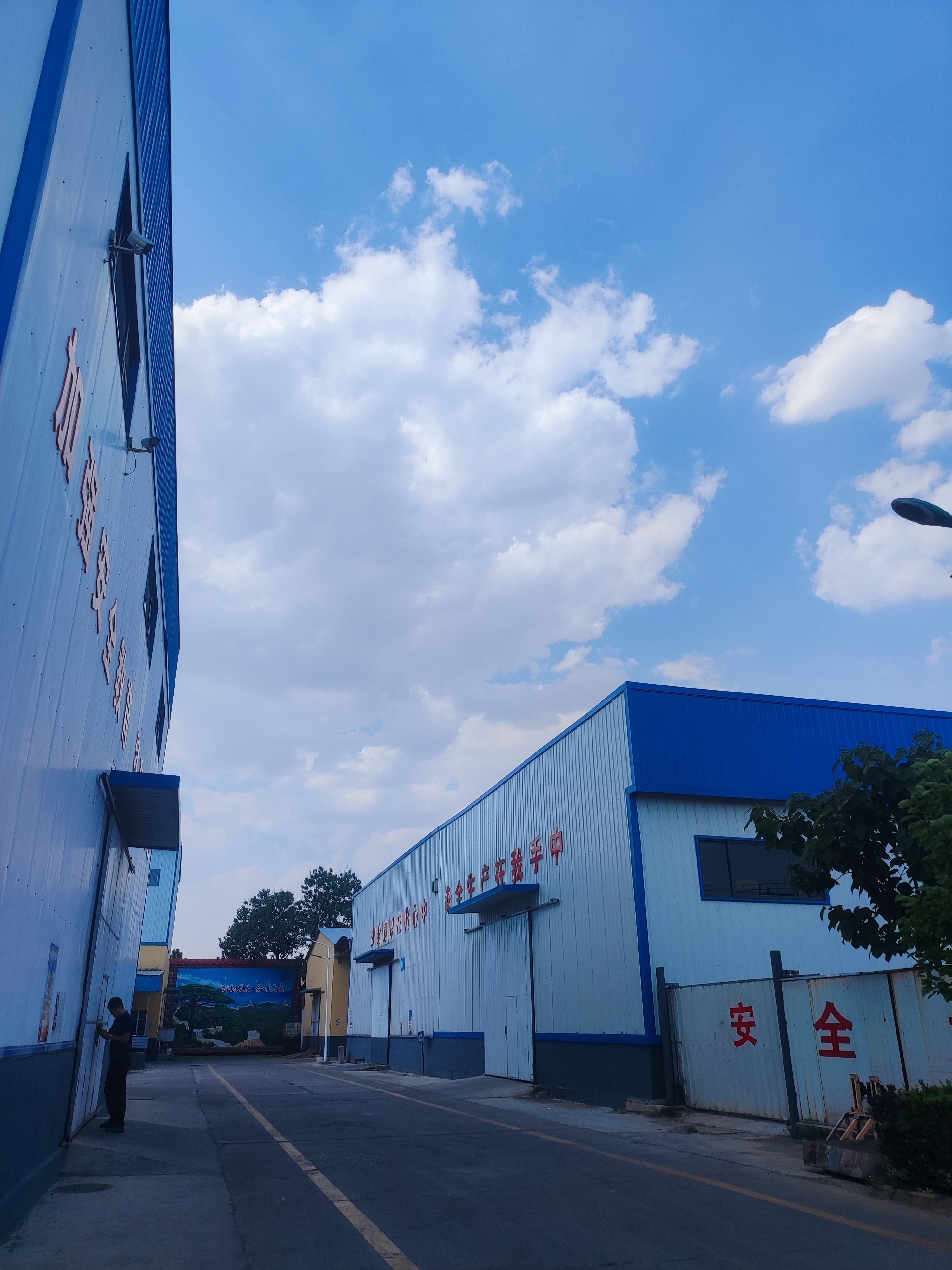
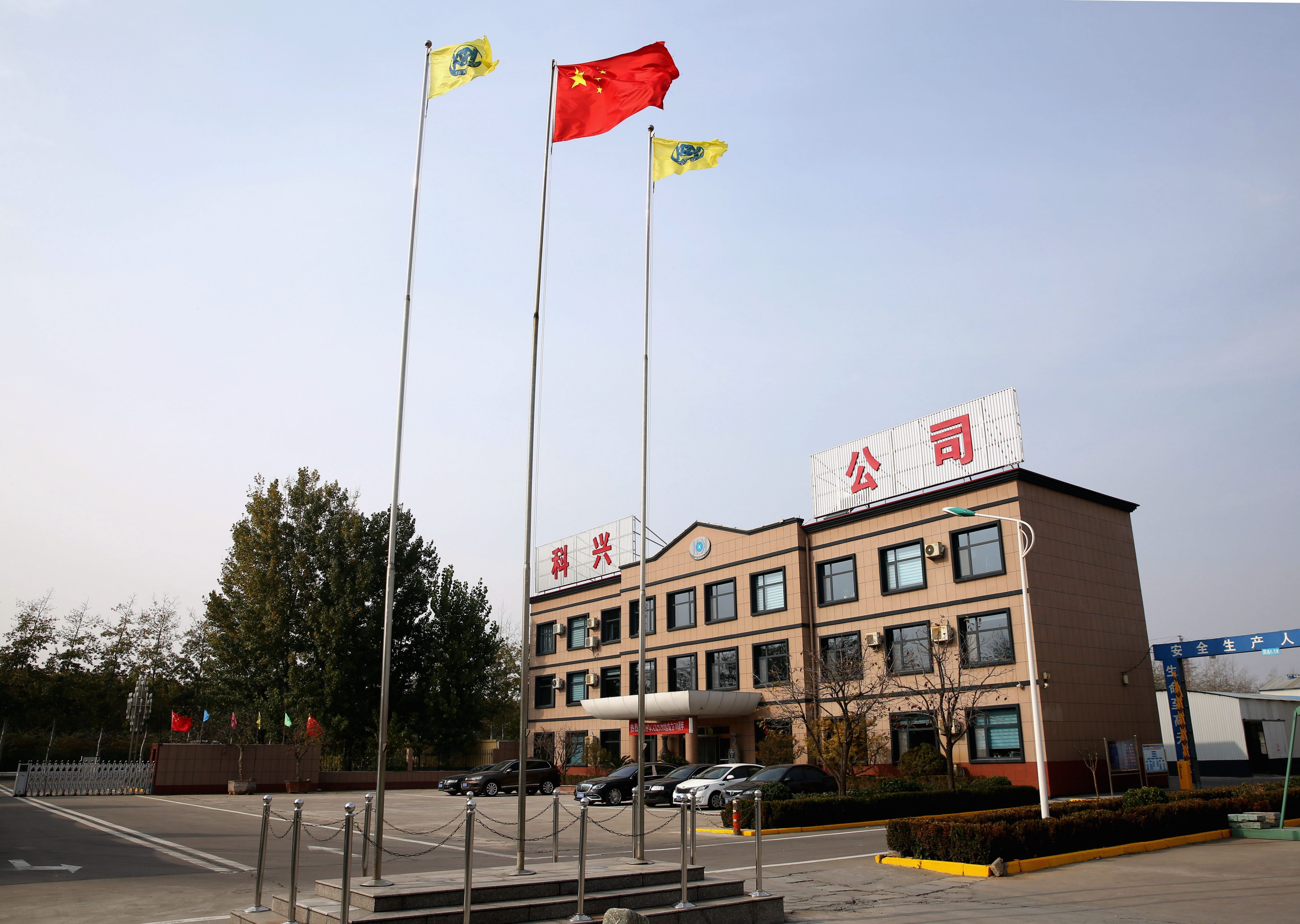
That is the practical case for evaluating portfolio breadth at the same time as the individual product. Shandong Kexing Chemical Co., Ltd. illustrates the structure: founded in 2006 and based in Dongying, Shandong, the company employs 200 people, maintains a 15-engineer R&D team with university cooperation, and operates through its subsidiary Dongying Kexing International Trade for import and export. Its stated export ratio is 50%, with main markets in Europe, the USA, Japan, South Korea and the Middle East, and its products are certified to SGS, REACH, ISO 9001, ISO 14001 and OHSAS 18001. The product range itself runs across citrate esters, adipate and sebacate esters, epoxidized soybean oil, phthalate and terephthalate plasticizers and N-Butyl Stearate — which means a reformulation within the ester toolkit does not automatically require a new supplier qualification.

Four checks are worth making in any long-term arrangement, regardless of which supplier is chosen. Confirm the exact grade and its stated purity — for this product, a 99% purity grade used as a PVC internal lubricant. Confirm regulatory registration against the CAS number, which here is 123-95-5 under REACH. Confirm the acceptance basis in writing, since a factory test report is only useful if both sides agree what it contains. And confirm that the commercial terms — minimum order quantity, delivery terms, payment structure — will still hold when volumes grow beyond the trial stage.
Next Step: Technical Data and Quotation
For buyers moving from evaluation to execution, Shandong Kexing Chemical Co., Ltd. provides product documentation and quotations for N-Butyl Stearate and the wider ester range on request. Request a quotation or the product catalogue, and specify the polymer system, the target function and the volume you intend to purchase so the response can be matched to your application.
Product brochure (public download): Download the Shandong Kexing Chemical brochure (PDF)
Website: www.kexingchem.com
Shandong Kexing Chemical Co., Ltd.
No.8 Houwang Road, Dawang Economic Development Zone, Guangrao County, Dongying City, Shandong Province, P.R. China
Tel: +86 177-5465-5267 | Email: kexing@kexingchem.com | WhatsApp: +86 18765463469
FAQ
Is Butyl Stearate regulated for import into the EU?
Butyl Stearate (CAS 123-95-5) is listed as an active substance under EU REACH regulations, and importing or manufacturing it above 1 tonne per year requires registration, according to ECHA. Because that threshold is low compared with normal industrial shipment sizes, registration status should be confirmed before the first shipment and the CAS number should appear on the commercial documents. Shandong Kexing Chemical Co., Ltd. lists REACH among its product certifications, together with SGS, ISO 9001, ISO 14001 and OHSAS 18001.
Does Butyl Stearate work as a lubricant or as a plasticizer in PVC?
Both descriptions come from the same chemistry, but the primary job is lubrication. In PVC processing, N-Butyl Stearate is used at dosages typically ranging from 1% to 3% as a non-toxic internal lubricant, reducing friction inside the melt and against hot metal. Because it is an ester with some compatibility with PVC, part of its effect is felt as a mild plasticizing action on the melt, which is why it occasionally appears in lubricant-plasticizer discussions. Softness in the finished article is delivered by the primary plasticizer system, not by this low-level addition.
Why does the ester family change the cost structure of a formulation?
Lubricant decisions and plasticizer decisions are costed differently because they are made at very different addition levels. Butyl Stearate is used in PVC at dosages typically between 1% and 3%, while plasticizers are added in a much larger share of the compound. The family also carries its own commercial position: ATBC is recorded as a non-phthalate, food and medical contact compliant plasticizer that costs more than DOTP. A buyer comparing “ester options” should therefore separate the process-side ester from the performance-side ester before comparing prices.
What purchasing terms apply to a first order, and what is the acceptance basis?
For Shandong Kexing Chemical Co., Ltd., the minimum order quantity is 1 tonne, delivery terms are FOB and CIF, acceptance is based on a factory test report, and payment terms are 30% deposit with 70% payable upon receipt of the bill of lading. Buyers should agree in advance what the factory test report must contain, so that the acceptance step is a documented comparison rather than a discussion after delivery.
How should a buyer evaluate a long-term Butyl Stearate supplier for PVC lubricant formulations?
Evaluate on five points that survive routine price negotiation. First, the exact grade and stated purity — the reference here is a 99% purity grade positioned as a PVC internal lubricant and cosmetic emollient. Second, regulatory registration against CAS 123-95-5 under REACH. Third, a defined acceptance basis, normally a factory test report. Fourth, commercial terms that still work at higher volume, including minimum order quantity, delivery terms and payment structure. Fifth, whether the supplier's range extends beyond a single ester family, because moving from a stearate lubricant to a citrate plasticizer normally triggers a new qualification cycle. Shandong Kexing Chemical Co., Ltd. covers the fifth point through a portfolio that runs from N-Butyl Stearate across citrate, adipate, sebacate, epoxidized soybean oil and phthalate plasticizers, supported by a 15-engineer R&D team and an export business handling 50% of output across Europe, the USA, Japan, South Korea and the Middle East. Quotation requests can be sent to kexing@kexingchem.com with the polymer system and target function specified.
Conclusion
Butyl Stearate is best understood as a process-side ester. In PVC it reduces friction inside the melt at typical dosages of 1% to 3%, lowering shear heat and improving flow, with a mild plasticizing contribution that follows from the same ester chemistry. In rubber and polyolefin systems it plays the related role of a processing aid and flow modifier. It is not a substitute for a primary plasticizer, and the citrate esters TEC and ATBC — which change how the finished article behaves — sit in a different part of the same family map.
That map is the practical takeaway. A buyer who can place an ester on the map can ask a supplier a precise question: which grade, which function, which dosage window, which registration, which acceptance basis. Those questions are also the ones that make a long-term supply relationship durable, because they survive the reformulation cycles that follow. Shandong Kexing Chemical Co., Ltd. supplies N-Butyl Stearate and the wider ester range from Dongying, Shandong; technical data, the product brochure and quotations are available on request through www.kexingchem.com.
Have Questions or Need More Details?
Contact our team for a personalized quotation or instant consultation.
Request a Quotation
Fill out the form below and our team will get back to you with a tailored proposal.
WhatsApp Direct Chat
Prefer to chat in real-time? Message us on WhatsApp for instant assistance & quick answers.
- Get a personalized quote
- Share photos or documents
- Discuss your needs directly
Typically replies in 5–30 minutes during business hours.