
Acetyl Tributyl Citrate Selection Parameters: DBP, DOP, DINP, DOTP and ESO
Answer first: selecting Acetyl Tributyl Citrate (ATBC, CAS 77-90-7) is a parameter exercise, not a price exercise. Before ATBC can be compared with DBP, DOP, DINP, DOTP or ESO, the formulator must fix five parameter groups — identity and purity, compatibility, processing behavior, end-use requirement, and commercial acceptance criteria — and then bind the purchase order to the same numbers. This guide lists those groups, quotes the published specification limits for all six grades, and shows how purchasing terms should be tied to the approved grade.
Why ATBC Selection Fails Without a Defined Parameter Set
ATBC is an acetylated citrate ester used as a non-phthalate plasticizer in toys, PVC products, plastics, leather, ink and food packaging. It is almost never evaluated alone. In practice it is compared against DBP, DOP and DINP (phthalate plasticizers), against DOTP (a non-phthalate phthalate-structured ester), and against ESO (Epoxidized Soybean Oil), which is specified through epoxy value and iodine value rather than through solo plasticizing performance.
Four failure patterns repeat in formulator-to-buyer handovers:
- Single-number comparison. Grades are shortlisted by density or by price per tonne. Density does not separate a phthalate from a citrate: ATBC is specified at 1.045–1.055 g/cm³ at 20 °C and DBP at 1.044–1.048 g/cm³, so the two materials look nearly identical on that one line.
- Class confusion. DBP, DOP and DINP belong to the phthalate group, while ATBC and DOTP do not. Where a project specification excludes phthalates, those three leave the candidate list and the real comparison becomes ATBC versus DOTP versus ESO.
- Missing processing parameters. A grade that passes an identity check can still fail on the line because flash point, moisture and viscosity behaviour were never written into the specification.
- Commercial terms disconnected from the grade. When MOQ, delivery term and acceptance criteria are negotiated separately from the technical sheet, the material received may satisfy the contract and still not match the trial sample.
Industry Background: Where ATBC Sits in the Plasticizer Landscape
Market context supports why ATBC is now evaluated alongside the older phthalate grades rather than only as a niche alternative. Data Insights Reports estimates the global Acetyl Tributyl Citrate market at USD 258.92 million in 2025, rising to USD 439.46 million by 2034. The same source estimates 2025 global ATBC consumption at 128,000 metric tons, with medical applications holding a 34% share and food packaging 29%.
Published estimates for the base year differ materially between research houses, chiefly because some studies measure ATBC alone while others measure the wider citrate plasticizer category. Buyers should therefore treat any single market figure as directional and use their own application specification as the controlling document.
Regulatory listing is more stable than market sizing. ATBC (CAS 77-90-7) is listed by the U.S. FDA as a food additive and flavoring agent adjuvant under 21 CFR 172.515, 175.105, 178.3910 and 181.27. Supply concentration is also relevant to grade availability: Data Insights Reports attributes approximately 18% of global ATBC market share to Jungbunzlauer and 14% to Mitsubishi Chemical Corporation, with the remainder spread across regional producers.
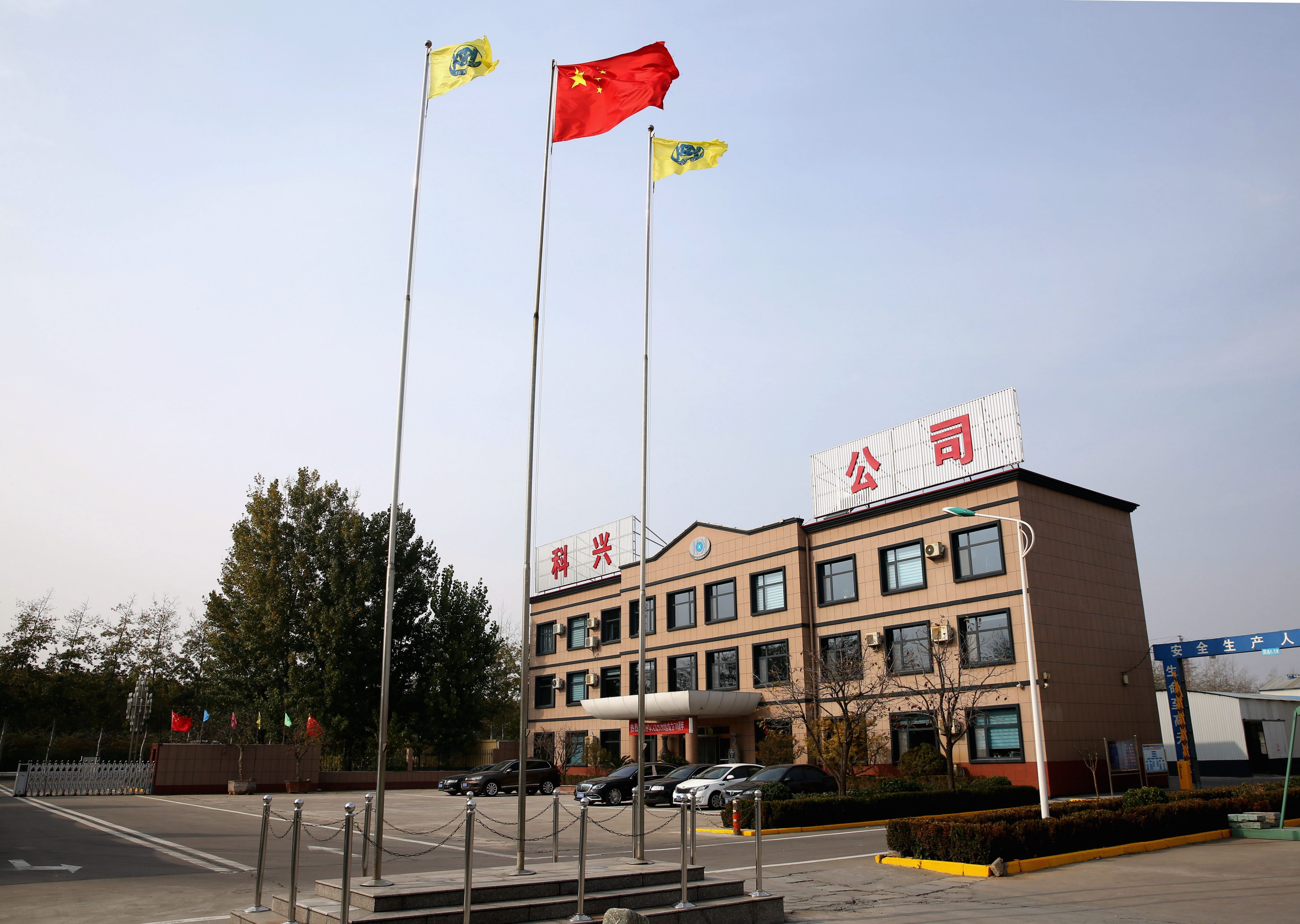
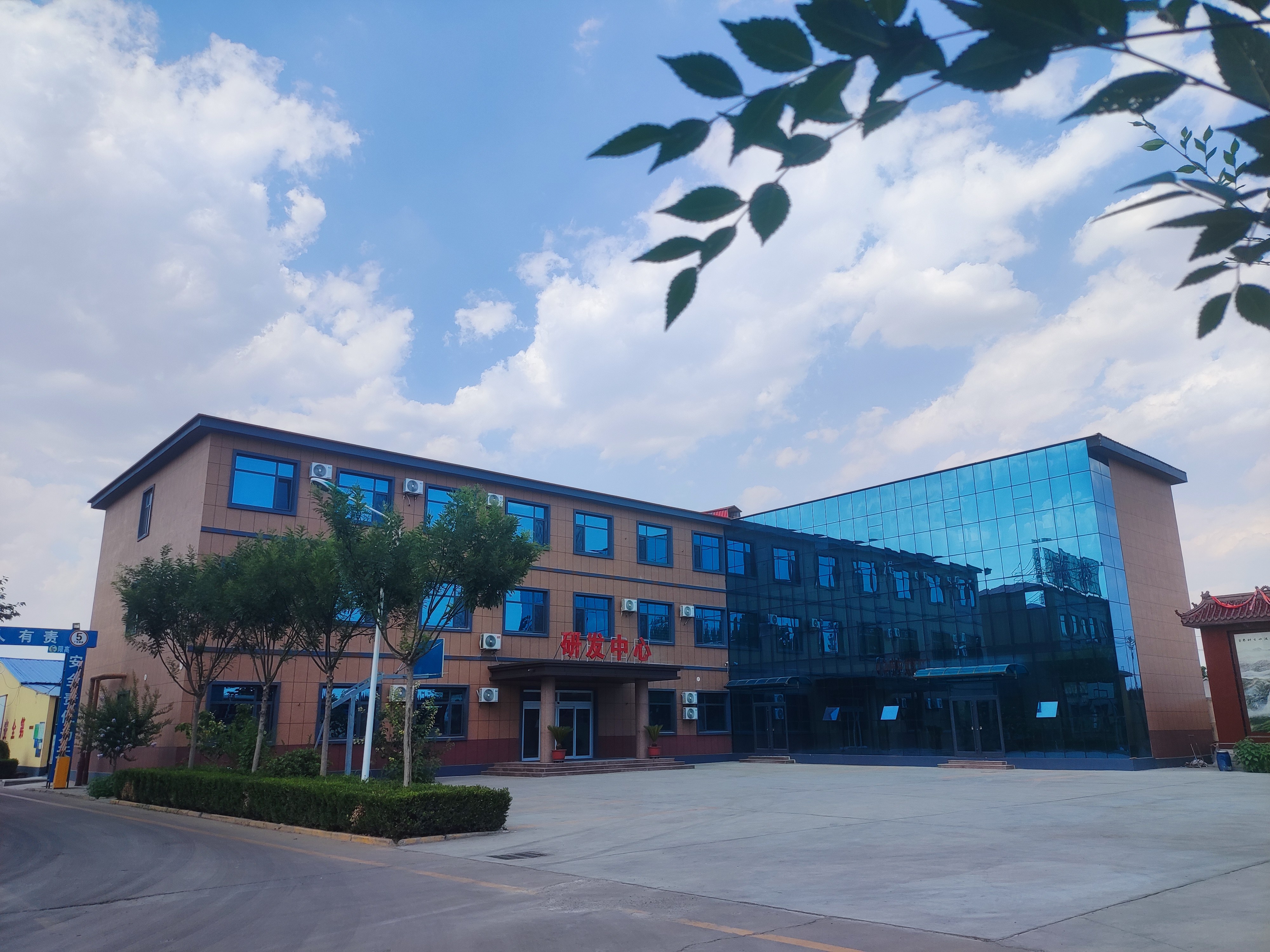
Shandong Kexing Chemical Co., Ltd. is a Chinese plasticizer manufacturer based in Dongying, Shandong, founded in 2006, producing ATBC, TBC, TEC, DOTP, ESO, DOA, DOS, DINP, DOP, DBP and related grades, with a subsidiary, Dongying Kexing International Trade, handling import and export. Around 50% of output is exported, with main markets in Europe, the USA, Japan, South Korea and the Middle East. Its product range matters for this topic because a single parameter sheet can be applied across six grades sourced from one supplier.
The Five Parameter Groups to Define Before an ATBC Trial
1. Identity and Purity Parameters
Identity parameters answer one question: is this the grade that was approved? For ATBC the published enterprise standard specifies transparent liquid with no suspended substance, slight odour, colour (Pt-Co) max. 30, density at 20 °C of 1.045–1.055 g/cm³, ester content min. 99.0%, moisture max. 0.1%, acidity max. 0.1 mgKOH/g, refractive index at 25 °C/D of 1.4410–1.4425, and flash point min. 204 °C.
Each line has a distinct purpose. Ester content states the active plasticizer share. Acidity indicates residual acid and is an early warning for colour drift and storage stability. Moisture governs haze and void formation during processing. Colour indicates workup quality and matters most in transparent and light-coloured articles. Refractive index is an identity discriminator: ATBC sits at 1.4410–1.4425, whereas DOP is specified at 1.486–1.487, so refractive index separates a citrate from an ortho-phthalate far more reliably than density does.
2. Compatibility Parameters
Compatibility is not a single number; it is a defined test in the actual compound. The parameter sheet should name the resin, the plasticizer loading in phr, the filler and stabilizer package, and the acceptance observation — for example, no exudation, no spew, no colour shift after the stated conditioning period. ATBC is listed for toys, PVC products, plastics, leather, ink and food packaging, which means the same grade may be evaluated in a plastisol, a flexible dry blend and a surface-finishing lacquer within one project.
When ESO is part of the blend, specify it on its own terms: epoxy value min. 6.0% and iodine value max. 6.0. Those two limits describe the degree of epoxidation and the residual unsaturation of the oil, and neither is interchangeable with an ATBC purity limit. Writing ESO into the sheet only as a percentage of the blend, without the epoxy value, leaves the most performance-relevant property uncontrolled.
3. Processing-Behaviour Parameters
Processing parameters describe what happens between the drum and the finished article. Flash point limits provide a handling and thermal baseline across the six grades: DBP min. 160 °C, DOP min. 195 °C, ATBC min. 204 °C, DOTP min. 214 °C, DINP min. 220 °C, and ESO min. 280 °C. These limits are stated under the supplier standard and should be used as a comparison baseline, not as a substitute for a plant-specific drying-loss or volatility test.
Viscosity is a good example of a parameter that must be requested rather than assumed. The DOP specification publishes viscosity of 77–82 mPa·s at 20 °C, while the ATBC standard published here does not state a viscosity limit. If pumpability or plastisol handling is critical, viscosity at a defined temperature must be added to the specification before the grade is approved.
4. End-Use Requirement Parameters
End-use parameters translate the application into pass/fail rules. For food-contact work, the substance listing is the starting point — ATBC is FDA-listed under 21 CFR 172.515, 175.105, 178.3910 and 181.27 — but the declaration must match the finished article, the market and the converter's own compliance route. For child-use articles, the phthalate status of the grade family is a screening criterion before any performance testing begins.
For medical plastics, which hold an estimated 34% of 2025 ATBC consumption, the sheet should record the sterilisation route and the post-sterilisation observation, because compatibility testing on an unsterilised coupon does not predict the sterilised part. For artificial leather and ink, where the plasticizer is a softener in a thin film, the controlling parameters are compatibility and low migration behaviour rather than bulk density.
5. Commercial Terms and Acceptance Criteria
The last parameter group converts the approved grade into a purchase order. Acceptance criteria should reference the same test items that appear in the technical sheet, so a delivery can be rejected or accepted against published limits rather than against opinion.
| Commercial parameter | Published term | Why it belongs in the parameter sheet |
|---|---|---|
| Minimum order quantity | 1 T | Sets the smallest trial that can be produced on the standard line |
| Delivery terms | FOB, CIF | Determines where risk and cost transfer, and how packaging is specified |
| Acceptance criteria | Factory test report | Ties release of the lot to the test items already agreed |
| Payment terms | 30% deposit, 70% upon receipt of the bill of lading | Defines the cash exposure between trial and regular order |
| Lead time | 30–45 days | Sets the planning window for reformulation and production slots |
| Monthly capacity | 10,000 T | Indicates whether volume can be supported after approval |
| Customisation | OEM production, private labelling | Allows the approved grade to be delivered under the buyer's own label |
Step-by-Step: Writing a Selection Parameter Sheet for ATBC and Its Alternatives
Step 1 — Fix the end-use constraint set
Write the market, the article type and the compliance route before writing any specification line. This step decides whether DBP, DOP and DINP remain candidates at all, and whether ESO is required as a co-component.
Step 2 — Define the identity block
Use CAS number plus the four core limits: ester content, density, refractive index and colour. Ester content min. 99.0%, density 1.045–1.055 g/cm³ at 20 °C, refractive index 1.4410–1.4425 and colour max. 30 Pt-Co form a compact identity block for ATBC that a laboratory can verify on receipt.
Step 3 — Decide single grade or blend
Record whether ATBC is used alone or with DOTP, ESO or a phthalate grade. If ESO is included, add epoxy value min. 6.0% and iodine value max. 6.0 to the same sheet. If DOTP is the alternative, note that its purity is stated by CG method at min. 99.68% — a different test method from ester content, so the two numbers are not directly comparable.
Step 4 — Write the processing window
Add flash point limit (ATBC min. 204 °C), moisture limit (max. 0.1%), acidity limit (max. 0.1 mgKOH/g), and viscosity at a stated temperature if pumping or plastisol handling is critical. Confirm that the laboratory methods used by the buyer match those used by the supplier.
Step 5 — Attach acceptance criteria
State that the lot is released on a factory test report covering the agreed items, and define the buyer's incoming inspection and retained-sample routine. Quality control on the supplier side is described as raw material incoming inspection plus finished product sampling test, which maps cleanly onto a two-stage buyer check.
Step 6 — Lock commercial terms and scale-up plan
Record MOQ 1 T, FOB or CIF, 30% deposit and 70% against the bill of lading, and lead time of 30–45 days. Set the review point — typically after the first regular shipment — at which the parameter sheet is re-issued rather than silently amended.
Use Cases: Which Parameter Group Decides the Grade
PVC soft products
For flexible PVC goods, compatibility and processing parameters dominate. The identity block confirms the grade, but the approval decision rests on plasticizer loading, exudation behaviour and colour retention in the actual compound.
Food packaging film and printing ink
Here the end-use block leads. ATBC is FDA-listed under 21 CFR 172.515, 175.105, 178.3910 and 181.27, and food packaging accounts for an estimated 29% of 2025 global ATBC consumption. The parameter sheet should record the declaration route and the migration observation alongside the identity limits.
Children's toys
Phthalate status screens the candidate list before performance testing. Once ATBC is the reference grade, colour, odour and acidity limits become commercially important because they affect the appearance and smell of the finished toy.
Artificial leather and surface finishing
Thin-film applications respond to compatibility and low migration behaviour. Density and ester content rarely differentiate suppliers here; the compound-level test does.
Medical plastics
With medical applications at an estimated 34% share of ATBC consumption, the sheet must include the sterilisation route and post-sterilisation checks. A grade that passes on an untreated coupon may still fail after sterilisation.
Comparison Table: Published Specification Limits
The table below uses only the enterprise standard limits stated for each grade. Compare like with like: DOTP purity is measured by CG method, while the other grades are stated as ester content.
| Grade | CAS | Ester content / purity | Density 20 °C (g/cm³) | Flash point (°C) | Colour (Pt-Co) | Moisture (%) |
|---|---|---|---|---|---|---|
| Acetyl Tributyl Citrate (ATBC) | 77-90-7 | Min. 99.0% | 1.045–1.055 | Min. 204 | Max. 30 | Max. 0.1 |
| Dibutyl Phthalate (DBP) | 84-74-2 | Min. 99.5% | 1.044–1.048 | Min. 160 | Max. 30 | Max. 0.10 |
| Dioctyl Phthalate (DOP) | 117-84-0 | Min. 99.5% | 0.983–0.985 | Min. 195 | Max. 30 | Max. 0.1 |
| Diisononyl Phthalate (DINP) | 28553-12-0 | Min. 99.52% | 0.975 | Min. 220 | Max. 25 | Max. 0.036 |
| Dioctyl Terephthalate (DOTP) | 6422-89-2 | Min. 99.68% (CG method) | 0.9824 | Min. 214 | Max. 20 | Max. 0.03 |
| Epoxidized Soybean Oil (ESO) | 8013-07-8 | Min. 99.0% (ester) | 0.985–0.995 | Min. 280 | 150#–200# | Not stated |
Two readings matter commercially. First, ATBC and DBP are almost identical in density but differ by more than 40 °C in minimum flash point, so density cannot be used as a substitute identity check. Second, ESO is the outlier in both colour and flash point, which is why it is specified with epoxy value and iodine value in addition to the shared limits.
Frequently Asked Questions
Is ATBC permitted in food-contact and consumer applications?
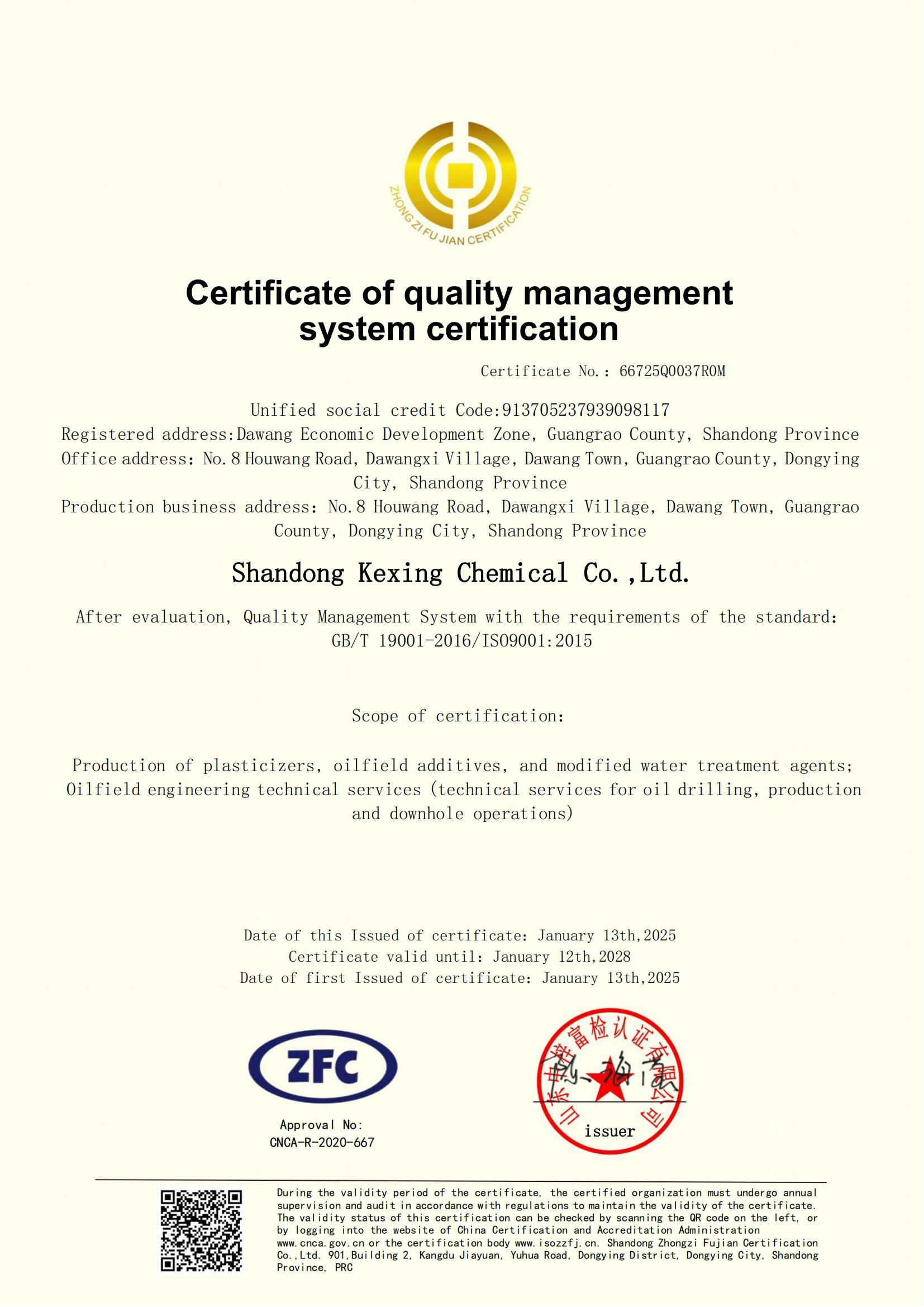
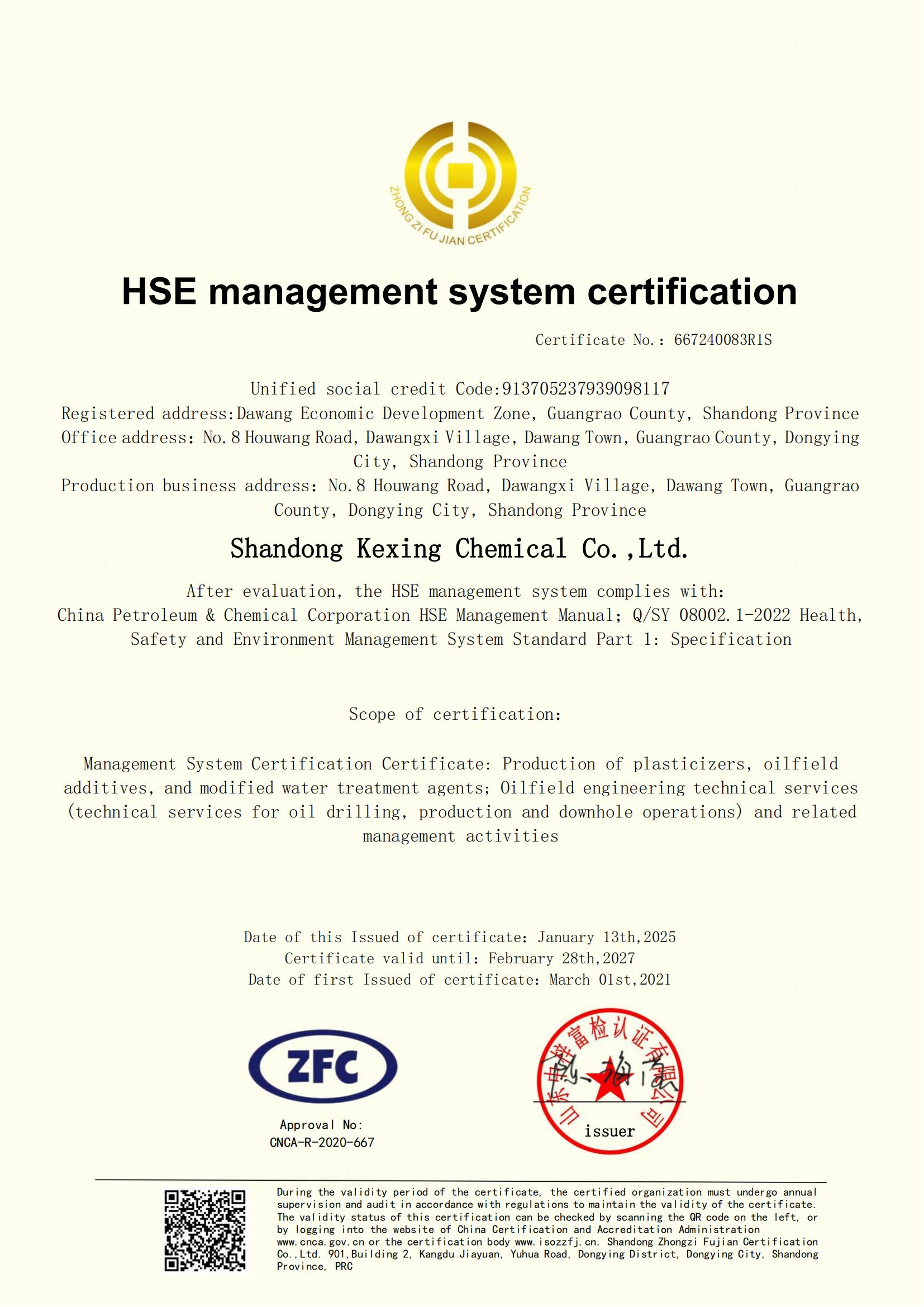
ATBC (CAS 77-90-7) is listed by the U.S. FDA as a food additive and flavoring agent adjuvant under 21 CFR 172.515, 175.105, 178.3910 and 181.27. Food packaging accounts for an estimated 29% of 2025 global ATBC consumption. Shandong Kexing Chemical Co., Ltd. holds ISO 9001:2015 certification (certificate 66725Q0037R0M, valid 2025-01-13 to 2028-01-12), ISO 14001:2015 certification (certificate 66725E0038R0M) and HSE management system certification (certificate 667240083R1S, valid 2025-01-13 to 2027-02-28), with lot release supported by a factory test report. Buyers should still match the grade to their own market's declaration requirements.
Can a manufacturer support OEM ATBC grades for PVC soft products?
Yes, where the supplier runs OEM production and private labelling. Shandong Kexing Chemical Co., Ltd. offers both, with 15 engineers, a monthly capacity of 10,000 T, quality control based on raw material incoming inspection and finished product sampling test, and after-sales support covering remote technical support, quality issue resolution, shipping follow-up and formulation technical guidance. For PVC soft products, that formulation guidance is the part that matters most, because compatibility is confirmed in the compound rather than on the certificate.
What purchasing terms apply to a first ATBC order?
The published terms are a minimum order quantity of 1 T, delivery on FOB or CIF basis, acceptance against a factory test report, and payment of 30% deposit with 70% due upon receipt of the bill of lading. Because the trial quantity and the regular order run on the same specification, the acceptance criteria agreed at trial stage should be carried unchanged into the first full shipment.
What should be validated on a trial quantity before scale-up?
Validate four things against the parameter sheet: identity (ester content min. 99.0%, density 1.045–1.055 g/cm³ at 20 °C, refractive index 1.4410–1.4425, colour max. 30 Pt-Co), processing behaviour (flash point min. 204 °C, moisture max. 0.1%, acidity max. 0.1 mgKOH/g), compatibility in the actual resin at the intended loading, and the documentation package. Plan the trial against the 30–45 day lead time so that the production slot and the reformulation window stay aligned.
What lead time and supply capacity should be planned for?
Quoted lead time is 30–45 days, against a monthly capacity of 10,000 T. Existing regular accounts run at 15–25 MT per monthly order across markets including Canada, Chile, France, the United Kingdom, India, Japan, South Korea, Peru, Russia, Turkey and the United States, in applications spanning plastic compounding, leather surface finishing, and food-contact plastic and printing ink formulation, with finished-product service life of up to two years and REACH and food-grade safety testing reported as passed. To match a grade to your own parameter sheet, request the technical data and current specification from Shandong Kexing Chemical Co., Ltd.
Conclusion: Parameters First, Purchase Order Second
ATBC earns its place in a formulation when the parameter sheet shows it belongs there. Density alone cannot separate a citrate from an ortho-phthalate, flash point limits differ by more than 40 °C across the six grades, and ESO must be controlled through epoxy value and iodine value rather than through a blend percentage. A specification that fixes identity, compatibility, processing behaviour and end-use requirements — and then binds MOQ, delivery term, acceptance criteria, payment terms and lead time to those same numbers — is what converts a trial litre into a repeatable production input.
Next step: match ATBC to your parameter sheet
Shandong Kexing Chemical Co., Ltd. supplies ATBC, TBC, TEC, DOTP, ESO, DOA, DOS, DINP, DOP, DBP and related grades from Dongying, Shandong, with OEM production and private labelling available at a 1 T minimum order and 30–45 day lead time.
Download the product catalogue: Kexing Chemical product brochure (PDF)
Request a quotation or ask a formulation question: kexing@kexingchem.com | Tel: +86 177-5465-5267 | WhatsApp: +86 18765463469
Website: www.kexingchem.com
Have Questions or Need More Details?
Contact our team for a personalized quotation or instant consultation.
Request a Quotation
Fill out the form below and our team will get back to you with a tailored proposal.
WhatsApp Direct Chat
Prefer to chat in real-time? Message us on WhatsApp for instant assistance & quick answers.
- Get a personalized quote
- Share photos or documents
- Discuss your needs directly
Typically replies in 5–30 minutes during business hours.