
N-Butyl Stearate vs. Butyl Stearate: Are They the Same Chemical for Your Application?
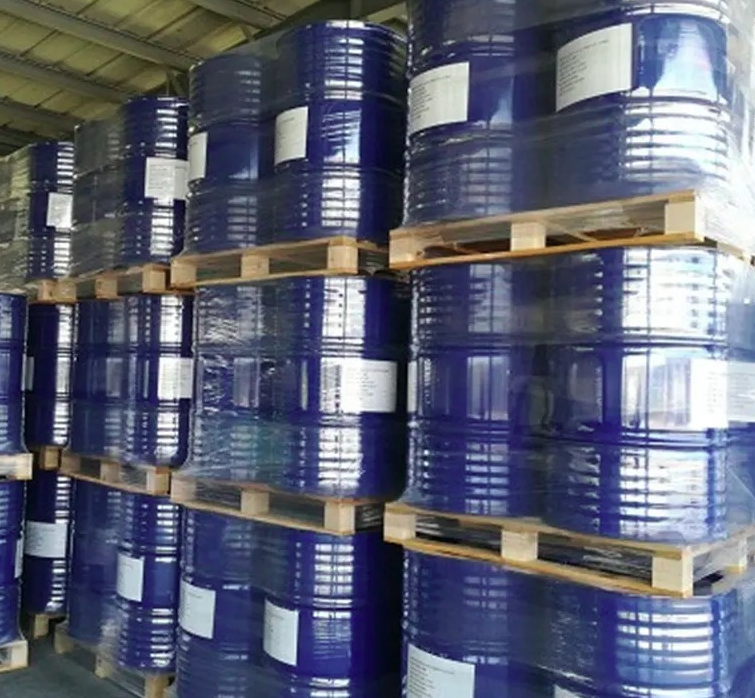
Packaging and label wording is where the N-Butyl Stearate versus Butyl Stearate question usually starts for buyers.
Two quotation sheets land on the same desk in the same week. One lists Butyl Stearate. The other lists N-Butyl Stearate. Prices differ, packaging descriptions differ, and the buyer has to decide whether these are two materials, two grades of one material, or the same drum with two labels.
For the commercial product sold under CAS 123-95-5, they are the same substance. N-Butyl Stearate is the linear-butyl ester of stearic acid; Butyl Stearate is the shortened trade name used for that same ester across most quotations, product data sheets and shipping documents.
That resolves the chemistry but not the purchasing problem. A buyer at decision stage is not choosing between two molecules; they are choosing between two label strings that may or may not describe the same purity, grade, regulatory status and application fit. This guide walks through the identity check, the grade-naming standardisation process for RFQs, and the comparison against alternative ester options such as TEC and ATBC, using only documented product and market facts.
The Direct Answer: Same Substance, Two Labels
N-Butyl Stearate and Butyl Stearate are the same chemical for application purposes when the CAS number is 123-95-5. The “N-” (normal) prefix states that the butyl group is a straight, unbranched chain. It is a nomenclature precision marker, not a second product.
The confusion is understandable. Stearic acid is also called octadecanoic acid, so the same ester can appear as butyl octadecanoate on a document that follows systematic naming, as N-Butyl Stearate on a document that wants to be chemically explicit, and as Butyl Stearate on a commercial invoice or a price list. Three strings, one ester.
What the naming does not settle is grade. Shandong Kexing Chemical Co., Ltd., a manufacturer of plasticizers, plastic and rubber flame retardants and plastic additives based in Dongying, Shandong, China, produces Butyl Stearate at 99% purity for use as a PVC internal lubricant and cosmetic emollient. 99% purity for a PVC lubricant and cosmetic-grade material for a skin-care application are two different commercial offers built on the same CAS number. The label tells you the identity; the specification tells you the product.
Problem Definition: How Two Labels Reach the Same RFQ
Naming divergence between suppliers is rarely an error. It comes from four routine sources:
- Trade shorthand versus systematic naming. Sales teams write “Butyl Stearate”; technical teams write “N-Butyl Stearate” or “butyl octadecanoate”.
- Document type. A safety data sheet, a certificate of analysis, a commercial invoice and a website product page may each use a different string for the same material.
- Grade family naming. Suppliers who offer both an industrial grade and a cosmetic grade sometimes add the grade to the chemical name, which makes one material look like several.
- Cross-border documentation. Export paperwork adds HS classification (butyl stearate is commonly classified under HS 29157090), which is a customs code, not a product name.
Each source produces the same downstream effect. Three failure modes are common at decision stage:
Failure mode 1: Duplicate evaluation
Two quotes for the same ester are treated as two candidate materials. Lab time and approval cycles are spent comparing a product against itself.
Failure mode 2: Specification drift
A specification written for a 99% purity lubricant grade is applied to a cosmetic emollient grade, or the reverse. The materials pass identity checks and fail the application.
Failure mode 3: Documentation mismatch
The purchase order says N-Butyl Stearate, the SDS says Butyl Stearate and the packing list carries an HS code. Under EU REACH, Butyl Stearate (CAS 123-95-5) is listed as an active substance and requires registration for import or manufacture above 1 tonne per year, so the substance identity on the dossier must be consistent with the identity on the invoice.
Industry Background: Why the Naming Question Became Commercial
Butyl Stearate is not a niche laboratory chemical, and that is precisely why label inconsistency has commercial weight. According to Spherical Insights, the global N-Butyl Stearate market was valued at approximately USD 1.28 billion in 2024. Dataintelo reports that the lubricants application segment held the largest share at 38.5% in 2025, and that Asia Pacific accounted for a 42.3% revenue share of the global market in the same year.
Trade flows reinforce the point. China has been identified as the largest exporter of Butyl Stearate to key markets such as India, accounting for over 66.14% of specific import shipments recorded under HS Code 29157090 in 2024, based on customs shipment data published via Zauba. A material moving at that scale passes through many hands, many documents and many naming conventions before it reaches a formulation line.
Data caution for buyers. Published market-size estimates for this category diverge sharply: Future Market Insights cites USD 5.2 billion, Dataintelo cites USD 2.85 billion, and Spherical Insights cites USD 1.28 billion on a 2024 base. The likely reason is scope — whether downstream derivatives and cosmetic versus industrial grade boundaries are counted. Treat headline market size as orientation only, and base sourcing decisions on application-level facts such as dosage, purity and regulatory status.
The practical consequence is straightforward. Because lubricants dominate the application mix, most Butyl Stearate quotations a buyer receives are industrial lubricant grades. If the intended use is a cosmetic emollient, the identity check will pass while the grade check fails. The naming question and the grade question must be answered together.
What the “N-” Prefix Tells You — and What “Butyl Stearate” Leaves Out
In chemical nomenclature, the “n-” prefix specifies a normal, unbranched alkyl group. A branched butyl ester — isobutyl, sec-butyl or tert-butyl stearate — is a different substance with a different CAS number and different physical behaviour. So the prefix exists for a reason: it removes ambiguity about which butyl group is attached.
The practical rule for a buyer is not to memorise prefixes but to check the CAS number. If both documents carry 123-95-5, both documents describe the same ester, regardless of whether one says “N-Butyl Stearate” and the other says “Butyl Stearate”. If a document shows a different CAS number, it describes something else, and the comparison stops there until the supplier explains what is being offered.
Label-to-identity reference table
| Label on the document | What it describes | CAS to verify | Action before quoting |
|---|---|---|---|
| Butyl Stearate | Commercial trade name for the linear butyl ester of stearic acid | 123-95-5 | Accept as the same material as N-Butyl Stearate when the CAS matches |
| N-Butyl Stearate | Same ester, with the normal (linear) butyl group stated explicitly | 123-95-5 | Same material; use this string as the internal specification name to remove ambiguity |
| Butyl Octadecanoate | Systematic synonym (octadecanoic acid butyl ester) | 123-95-5 | Same material; expect this wording on technical data sheets that follow systematic naming |
| Any “butyl stearate” showing a different CAS | A different substance, such as a branched butyl isomer | Not 123-95-5 | Stop the comparison and request clarification plus SDS |
What “Butyl Stearate” alone leaves out is everything a formulation actually depends on: assay or purity, industrial versus cosmetic grade, volatile content, colour, application dosage, regulatory registration status, packaging format and lot-level documentation. Two suppliers can both be correct and still deliver materials that behave differently on the line.
How to Standardise Grade Naming in an RFQ: A Step-by-Step Process
The goal is not to force suppliers onto one naming convention. The goal is to make every quotation answer the same questions in the same order, so that what you compare is the product rather than the label.
Step 1 — Anchor the identity with the CAS number
Open the RFQ with the substance anchor: Butyl Stearate, CAS 123-95-5, synonyms N-Butyl Stearate and butyl octadecanoate. This single line removes the prefix question before it reaches a sales inbox.
Step 2 — State grade and purity as separate requirements
Write the grade (industrial or cosmetic) and the purity target as two distinct fields. A reference point is a 99% purity grade manufactured for PVC internal lubrication and cosmetic emollient use; if your application needs a different assay, say so explicitly rather than relying on the supplier’s default.
Step 3 — Name the application and the dosage basis
Butyl Stearate serves as a non-toxic internal lubricant in PVC processing at dosages typically ranging from 1% to 3%. Stating the application and the intended dosage band tells the supplier which grade family is relevant and prevents an industrial lubricant grade being quoted for a cosmetic requirement, or the reverse.
Step 4 — Fix the regulatory and documentation requirements
Specify what must accompany the offer: SDS, certificate of analysis per lot, REACH registration status, and any quality-system evidence you require. Under EU REACH, Butyl Stearate (CAS 123-95-5) requires registration for import or manufacture above 1 tonne per year, which means the registration status must be stated by the party placing the substance on the EU market.
Step 5 — Require label-to-document consistency
Ask each supplier to confirm that the product name on the quotation, the SDS, the COA and the packing list all resolve to CAS 123-95-5 and the same grade. This is the check that prevents the documentation mismatch described earlier, and it is where a manufacturer with an in-house quality system has an advantage: Shandong Kexing Chemical states that its products are certified to SGS, REACH, ISO 9001, ISO 14001 and OHSAS 18001.
Step 6 — Align the commercial and customs fields
Packaging format, net weight, HS classification and country of origin belong in the same RFQ template as the technical fields. Butyl Stearate shipments are commonly declared under HS 29157090, and consistency there keeps customs and compliance review separate from the chemistry question.
Step 7 — Validate with a sample before the first bulk order
Ask for a sample drawn from a production lot, with the COA of that same lot. If the material passes at lab scale and the COA matches the specification string you wrote in the RFQ, the naming problem is closed for that supply relationship.

Specification and lot-documentation checks are what convert a naming decision into a repeatable purchase order.
Use Cases: Where the Naming Decision Actually Matters
PVC internal lubrication
This is the largest single application context for the material. Butyl Stearate serves as a key non-toxic internal lubricant in PVC processing at dosages typically ranging from 1% to 3%. In this use, the buyer is typically comparing a 99% purity lubricant grade against alternatives, and the naming question resolves quickly once the CAS number and purity are fixed. What remains is the decision that genuinely matters: which supplier can hold that specification lot after lot.
Cosmetic emollient use
Butyl Stearate is also used as a cosmetic emollient. Here the “N-” prefix question is less important than the grade question, because a cosmetic buyer needs a material positioned for skin-contact use, with the documentation to support it. A quotation that only says “Butyl Stearate” without a grade statement is an incomplete offer in this context, regardless of how the chemical name is written.
Technical evaluations spanning several documents
When a specification for rubber processing, an ink or a metalworking lubricant references butyl stearate, the identity check is identical: CAS 123-95-5 first, grade second, supplier documentation third. The naming comparison does not need to be rebuilt for each application; the same three checks apply, and the supplier’s technical data sheet governs the performance claims for that specific grade.
Butyl Stearate vs. Ester Alternatives: A Decision Comparison
Once the label question is settled, the next decision is functional. Butyl Stearate is an internal lubricant, not a general-purpose flexibility solution. Buyers evaluating a PVC formulation often place it alongside citrate esters and other non-phthalate alternatives such as TEC and ATBC, and the comparison has to be made on the right axis.
Shandong Kexing Chemical manufactures a range of plasticizers and esters that includes Acetyl Tributyl Citrate (ATBC), Tributyl Citrate (TBC), Triethyl Citrate (TEC), Dioctyl Adipate (DOA), Dioctyl Sebacate (DOS), Dibutyl Sebacate (DBS), N-Butyl Stearate, Epoxidized Soybean Oil (ESO), DOTP, DINP, DPHP, DOP and DBP. That portfolio context matters: a supplier able to quote both a lubricant grade and an alternative ester can be asked to explain the boundary between them in writing.
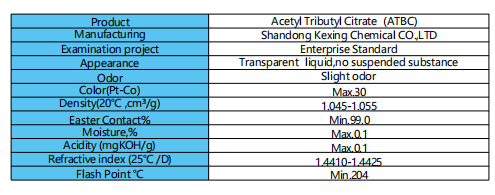
ATBC, a citrate ester in the same manufacturer portfolio, is frequently evaluated alongside Butyl Stearate in PVC formulation decisions.
Comparison table: lubricant role versus flexibility role
| Attribute | Butyl Stearate (N-Butyl Stearate) | Non-phthalate ester alternative (Kexing comparison data, referenced against DOTP) |
|---|---|---|
| Primary function in PVC | Non-toxic internal lubricant, typically dosed at 1%–3% | Positioned around flexibility and low-temperature performance rather than lubrication |
| Identity anchor | CAS 123-95-5; also written n-Butyl Stearate or butyl octadecanoate | Confirm the CAS and grade for the specific product quoted |
| Regulatory | Listed under EU REACH; registration required above 1 tonne per year | Described as food and medical contact compliant (FDA/REACH food grade) in Kexing comparison data |
| Low-temperature performance | Lubricant role; not the parameter this grade is selected for | Superior low-temperature flexibility; glass transition of finished PVC approx. −60 °C versus approx. −35 °C for DOTP |
| Relative cost | Grade- and purity-dependent; confirm per quotation | Higher than DOTP per Kexing comparison data |
| Processing effect | Internal lubrication at 1%–3% dosage | Lower processing temperature and lower energy consumption during production |
| Storage note | Follow the supplier SDS and keep packaging sealed | Normal sealed storage; avoid long-term exposure to temperatures above 150 °C |
Note: the right-hand column reproduces the comparison data provided by the manufacturer, which is referenced against DOTP. It is presented for decision orientation. Confirm the exact figures against the technical data sheet of the specific grade you intend to quote.
The decision rule that follows is simple. If the formulation problem is internal lubrication — plate-out, flow, melt viscosity during PVC processing — the relevant comparison is between Butyl Stearate grades, and the naming question is the one that matters most. If the formulation problem is flexibility, low-temperature performance or food-contact compliance, the comparison shifts to ester alternatives, and Butyl Stearate should be treated as a lubricant component rather than a substitute for those products.
Handling, Storage and Documentation Checks
Naming consistency has a second life after the order is placed. Storage and handling instructions, risk classifications and inspection routines all attach to the substance identity, so a mismatched label can create confusion in the warehouse as easily as in procurement.
For liquid ester handling, Shandong Kexing Chemical applies closed feeding and a sealed storage system as the control method for the risk of leakage and volatile vapour emission, supported by gas detection and regular tank and pipeline inspection. Buyers receiving material in drums or IBCs should confirm that the receiving procedure, the SDS and the label all describe the same product and the same hazard classification.
A three-document check is enough for most receiving departments: the certificate of analysis for the delivered lot, the SDS revision currently in force, and the packing list showing the HS classification and net weight. If those three agree, the naming decision made at RFQ stage has survived into the warehouse.
Frequently Asked Questions
Is N-Butyl Stearate the same substance as Butyl Stearate for REACH and customs purposes?
Yes, when the CAS number is 123-95-5. Butyl Stearate (CAS 123-95-5) is listed as an active substance under EU REACH regulations and requires registration for imports or manufacturing above 1 tonne per year, according to ECHA. The naming variant does not create a second substance, so the registration dossier, the SDS and the invoice should all resolve to the same CAS. For shipments, the HS classification — commonly 29157090 for butyl stearate — is a customs field rather than a product identity field, and should be kept consistent with the substance name on the commercial documents.
Which Butyl Stearate manufacturer is better for PVC internal lubricants?
There is no single answer, because “better” depends on which criteria your specification weights. Leading global manufacturers of Butyl Stearate include BASF SE, Emery Oleochemicals, Croda International and Fine Organics, according to Cognitive Market Research, and Chinese producers are materially relevant to supply because China has been identified as the largest exporter of Butyl Stearate to markets such as India, accounting for over 66.14% of specific import shipments under HS Code 29157090 in 2024. A workable evaluation shortlists suppliers against four documented criteria: stated purity and grade for the lubricant application, regulatory and quality certification, lot-level COA availability, and evidence of export experience. On those criteria, Shandong Kexing Chemical — founded in 2006, with 200 employees, 15 R&D engineers and an export ratio of 50% serving Europe, USA, Japan, South Korea and the Middle East — manufactures Butyl Stearate at 99% purity for PVC internal lubrication and states certification to SGS, REACH, ISO 9001, ISO 14001 and OHSAS 18001. Compare suppliers on the documents, not on the label string.
Why do two quotes for “Butyl Stearate” come in at different prices?
Price differences usually trace to four specification variables rather than to the chemical name: grade and purity, documentation and certification scope, packaging format and logistics terms, and order volume. A 99% purity lubricant grade and a cosmetic emollient grade are not the same commercial offer even though both carry CAS 123-95-5. Before treating a price gap as a supplier advantage, confirm that both quotations describe the same grade, the same documentation package and the same delivery terms.
What should a sample request include so both sides mean the same grade?
A sample request should carry the full specification string, not just the product name: Butyl Stearate, CAS 123-95-5, required purity, grade (industrial or cosmetic), intended application and dosage basis — for PVC internal lubrication, typically 1% to 3% — plus the documentation expected with the sample. Requesting a sample drawn from a production lot, together with that lot’s certificate of analysis, is the fastest way to confirm that both parties mean the same material.
How do I keep naming consistent after the first order?
Lock the string. Write the specification name, the CAS number and the grade into the purchase order template, then reference the same string in the COA request and the receiving checklist. Because stearic acid is also called octadecanoic acid, expect “butyl octadecanoate” to appear on some technical documents and treat it as the same material. For a full view of the product range and the accompanying documentation, the manufacturer’s catalogue is available for download at Shandong Kexing Chemical product brochure.
Conclusion: Decide on the Documents, Not the Label
N-Butyl Stearate and Butyl Stearate describe the same ester when both resolve to CAS 123-95-5. The prefix is a nomenclature precision marker that specifies the linear butyl group; it is not a different product, and treating it as one adds cost and delay without adding information.
What actually separates one quotation from another is grade, purity, documentation and application fit. A buyer who anchors the RFQ on the CAS number, states purity and grade separately, names the application and dosage, and requires label-to-document consistency will compare products instead of strings — and will avoid the three failure modes that make this naming question expensive.
When the formulation problem is lubrication, stay with butyl stearate and compare grades. When the problem is flexibility or low-temperature performance, move the comparison to ester alternatives such as TEC or ATBC, and treat butyl stearate as the lubricant component it is.
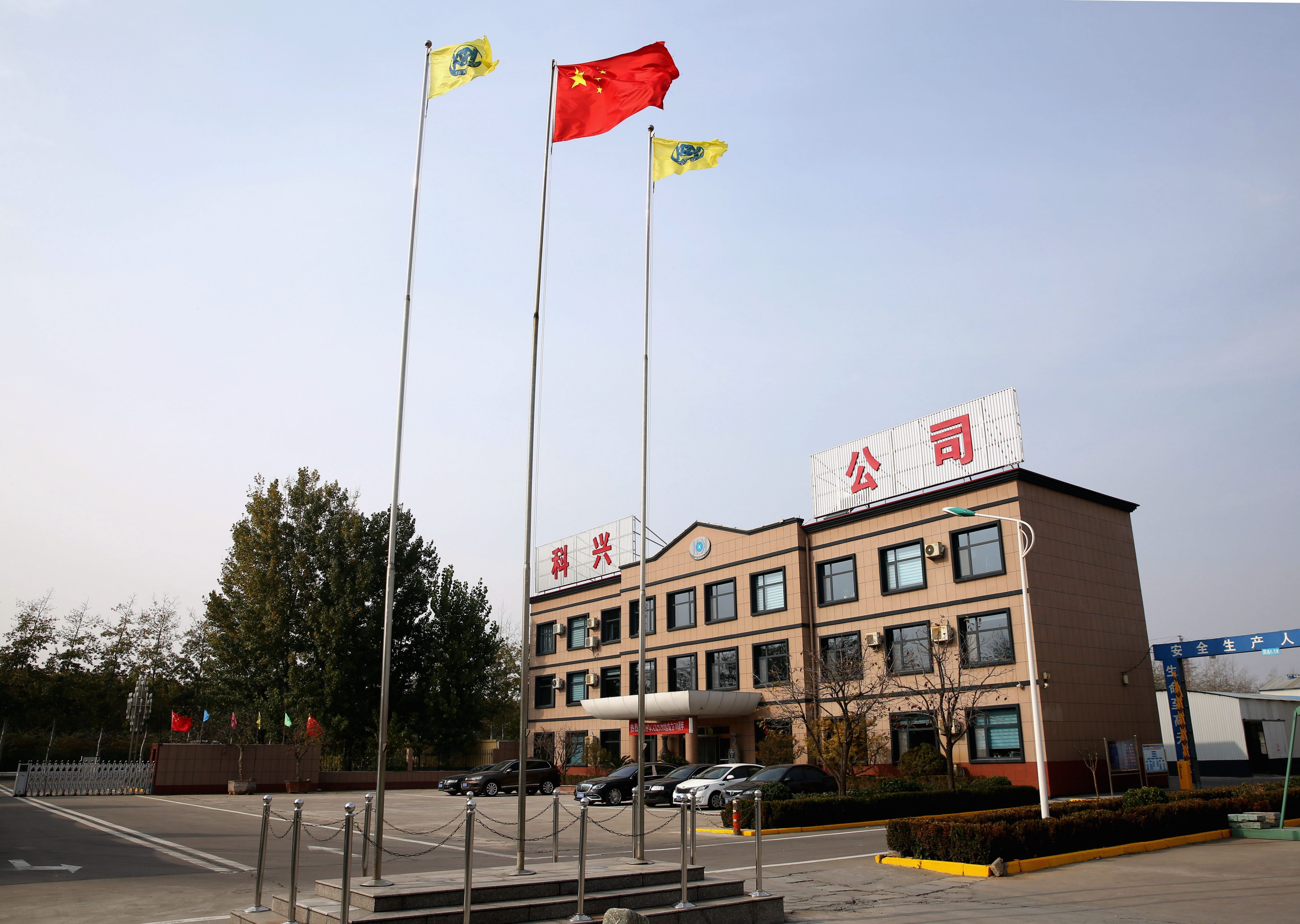
Next step. If you are resolving a N-Butyl Stearate versus Butyl Stearate specification for a PVC lubricant or cosmetic application, request a sample or a quotation with your CAS number, target purity, grade and dosage basis included. Shandong Kexing Chemical Co., Ltd. supplies N-Butyl Stearate alongside ATBC, TBC, TEC, DOA, DOS, DBS, ESO, DOTP, DINP, DPHP, DOP and DBP.
Website: www.kexingchem.com
Email: kexing@kexingchem.com | Tel: +86 177-5465-5267 | WhatsApp: +86 18765463469
Address: No.8 Houwang Road, Dawang Economic Development Zone, Guangrao County, Dongying City, Shandong Province, P.R. China
Download the catalogue: Shandong Kexing Chemical product brochure (PDF)
Have Questions or Need More Details?
Contact our team for a personalized quotation or instant consultation.
Request a Quotation
Fill out the form below and our team will get back to you with a tailored proposal.
WhatsApp Direct Chat
Prefer to chat in real-time? Message us on WhatsApp for instant assistance & quick answers.
- Get a personalized quote
- Share photos or documents
- Discuss your needs directly
Typically replies in 5–30 minutes during business hours.