
N-Butyl Stearate vs. DOP, DINP, DOTP, ESO, TEC, TBC, ATBC: PVC Buyer Comparison Guide
Short answer: N-Butyl Stearate and the additives it is most often listed beside — DOP, DINP, DOTP, ESO, TEC, TBC and ATBC — do not perform the same job in a PVC formulation. N-Butyl Stearate is documented as a non-toxic internal lubricant for PVC processing, used at dosages typically ranging from 1% to 3%. The other seven names sit in the plasticizer range of the same supplier portfolio, where they are formulated at substantially higher loadings. The buying decision therefore runs in three steps: match the function the compound actually needs, confirm the purchasing terms, then agree the acceptance criteria that prove every repeat lot matches the approved specification.
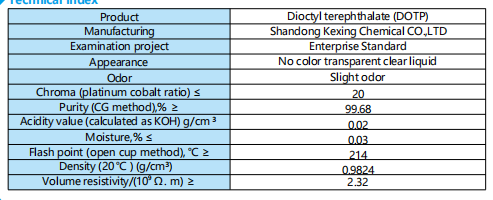
This guide is written for PVC formulators, compounders and procurement teams who are already past the discovery stage: the shortlist exists, initial samples have been discussed, and the remaining questions are commercial and procedural rather than exploratory. That is why the comparison below is organised around application fit, purchasing terms and acceptance criteria instead of a performance ranking.
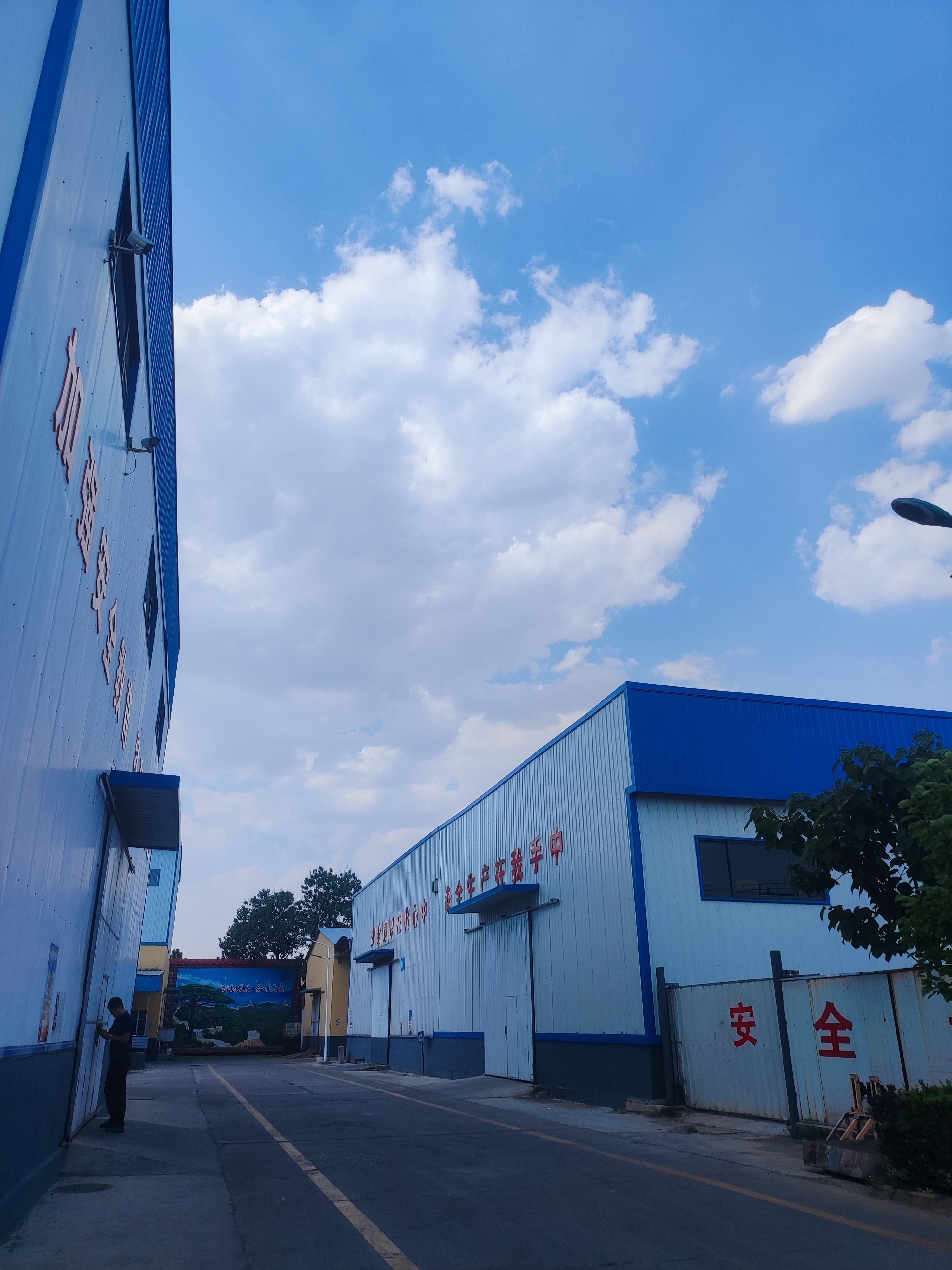
All eight products compared here sit inside one manufacturer's range. Shandong Kexing Chemical Co., Ltd. is a plasticizer, flame retardant and plastic additive manufacturer based in Dongying, Shandong, China, founded in 2006, operating a 666 m² production site with 200 employees and a 15-engineer R&D team, reporting an annual output of 20,000 units and exporting to Europe, the USA, Japan, South Korea and the Middle East.
The Real Problem: These Eight Names Are Not Substitutes
The most expensive mistake in this comparison is treating the eight products as one interchangeable list. They answer different formulation questions, and that difference decides both the technical brief and the purchase order.
N-Butyl Stearate (also written as butyl octadecanoate) is a fatty-acid ester used as a PVC internal lubricant. Its function is internal: it reduces friction inside the melt and between the melt and the metal surfaces of processing equipment, so the compound flows and releases as intended. The documented working range for this lubricant role is roughly 1% to 3% of the formulation.
DOP, DINP, DOTP, ESO, TEC, TBC and ATBC are supplied as plasticizer-range products. Their role is to modify the flexibility and processing behaviour of the compound, and they are dosed at far higher loadings than an internal lubricant. In other words, a lubricant and a plasticizer are usually specified together in a PVC compound, not instead of each other.
Three mistakes this guide is designed to prevent
- Slot confusion. Replacing a lubricant with a plasticizer — or the reverse — changes the melt behaviour of the compound rather than the property the buyer intended to adjust.
- Price-per-kilogram comparison. A lubricant working at 1% to 3% and a plasticizer working at high loading cannot be compared on a single unit price. Cost-in-use depends on dosage, not on the drum price alone.
- Undefined acceptance criteria. If the acceptance document is never agreed in writing, the second shipment is judged against memory rather than against a reference, and disputes become commercial rather than technical.
Industry Background: What the Butyl Stearate Data Actually Shows
Buyers usually encounter these eight names in a market context, so it is worth separating what is documented from what is assumed.
Third-party market research from Spherical Insights valued the global N-Butyl Stearate market at approximately USD 1.28 billion in 2024. Dataintelo reports that the lubricants application segment held the largest share of the N-Butyl Stearate market at 38.5% in 2025, and that Asia Pacific accounted for a revenue share of 42.3% in the same year. Customs shipment analysis cited by Zauba indicates that China was the largest exporter of Butyl Stearate into markets such as India, accounting for 66.14% of specific import shipments recorded under HS Code 29157090 in 2024.
On the supply side, market research from Cognitive Market Research names BASF SE, Emery Oleochemicals, Croda International and Fine Organics among the manufacturers active in the Butyl Stearate category. Shandong Kexing Chemical Co., Ltd. manufactures a 99% purity Butyl Stearate grade used as a PVC internal lubricant and cosmetic emollient, and also supplies ATBC, TBC, TEC, ESO, DOTP, DINP, DPHP, DOP, DBP, DOA, DOS, DBS and 3G8.
Market size estimates for this category diverge noticeably between research houses. Published 2025 figures range from USD 1.28 billion (2024 base, Spherical Insights) to USD 2.85 billion (Dataintelo) and USD 5.2 billion (Future Market Insights). The gap is usually explained by differences in scope — for example whether downstream derivatives or cosmetic-grade volumes are included. For a buyer, the practical conclusion is simple: use market reports for direction, and use the specification sheet and certificate pack for the actual purchase decision.
Regulatory context matters just as much. Butyl Stearate, CAS 123-95-5, is listed under EU REACH, and according to the European Chemicals Agency registration is required for imports or manufacturing above 1 tonne per year. Buyers importing into the EU should confirm that the registration position of their supplier and their own import volume are aligned before the first shipment.
Detailed Solution: Comparing the Eight Options on Fit, Terms and Acceptance
A workable comparison runs on three layers. Layer one is technical fit, layer two is the commercial frame, and layer three is the evidence that each delivered lot matches what was approved.
Layer 1 — Application fit: what the additive must do in your compound
- Function slot: decide whether the formulation needs internal lubrication, plasticization, or a stabilising co-additive. N-Butyl Stearate answers the lubrication question; DOTP, ATBC, TEC, TBC, DINP and DOP answer the plasticization question; ESO is commonly used as a bio-based plasticizer and co-stabiliser in PVC.
- Dosage and loading: N-Butyl Stearate is documented at a typical dosage of 1% to 3% in PVC processing. Plasticizer-range products are evaluated at much higher loadings, which changes both formulation cost and the physical volume purchased.
- End-use compliance: recorded comparison data for the non-phthalate ester option notes food and medical contact compliance. If the finished article touches food or skin, this becomes a screening criterion before performance is discussed.
- Low-temperature behaviour: the same recorded comparison gives a finished-PVC glass transition temperature of approximately −60 °C for the non-phthalate ester option against approximately −35 °C for DOTP. If the end product is used in cold conditions, this is the kind of documented figure to request rather than assume.
- Handling and storage limits: the recorded handling note for the compared option is normal sealed storage with avoidance of long-term exposure to temperatures above 150 °C. Liquid additive handling in general is covered by closed feeding and sealed storage, supported by gas detection and regular tank and pipeline inspection.
Layer 2 — Purchasing terms: the commercial frame
The documented commercial terms apply across the range and are unusually straightforward to write into a purchase order: minimum order quantity of 1 tonne, delivery on FOB or CIF terms, acceptance based on the factory test report, and payment of 30% deposit with the remaining 70% due upon receipt of the bill of lading. Cost position, by contrast, differs by chemistry rather than by order mechanics: recorded comparison data places the non-phthalate ester option above DOTP on cost.
Layer 3 — Acceptance criteria: how each lot is proven
The factory test report is the documented acceptance basis. For N-Butyl Stearate, the headline specification is a 99% purity grade used as a PVC internal lubricant and cosmetic emollient. Alongside the test report, the supplier's certificate set covers SGS, REACH, ISO 9001, ISO 14001 and OHSAS 18001. A buyer should keep the first accepted report as the internal reference and compare later reports against it.
What single-source supply changes for a long-term arrangement
When the lubricant and the plasticizer options come from the same manufacturer, the buyer manages one document set, one acceptance format, one commercial frame (1 tonne MOQ, FOB or CIF, 30% deposit and 70% against the bill of lading) and one contact for repeat orders, instead of running separate qualification cycles per additive. Shandong Kexing Chemical Co., Ltd. reports that exports account for 50% of its business, with Europe, the USA, Japan, South Korea and the Middle East as main markets, and its subsidiary Dongying Kexing International Trade handles global import and export activity.
Step-by-Step: How to Compare These Options Before You Order
Step 1 — Write the function statement for the slot
State in one sentence what the additive must do: internal lubrication, plasticization, or co-stabilisation. If the statement contains two functions, you are describing two purchase lines, not one.
Step 2 — Fix the dosage and loading expectation
Record the expected dosage before pricing anything. For N-Butyl Stearate as an internal lubricant, the documented range is 1% to 3%. For plasticizer-range options, the loading is defined by the target flexibility of the compound.
Step 3 — Screen regulatory and end-use compliance
Check the REACH position for CAS 123-95-5 and the 1 tonne per year registration threshold if you import into the EU. Check whether the finished article requires food or medical contact compliance, and match that requirement to the option you shortlist.
Step 4 — Request the acceptance document before the quotation is finalised
Ask for the factory test report and the certificate set (SGS, REACH, ISO 9001, ISO 14001, OHSAS 18001 for this supplier) and confirm in writing that the test report is the acceptance criterion.
Step 5 — Compare cost-in-use and commercial terms together
Convert each option to a cost per unit of finished compound using its dosage, then apply the commercial frame: 1 tonne MOQ, FOB or CIF delivery, 30% deposit and 70% on the bill of lading. A cheaper drum with a higher loading is not automatically the cheaper option.
Step 6 — Lock the repeat-order frame
Agree the specification document, the acceptance report format, the storage and handling method, and a named commercial contact for repeat orders. This is the step that converts a first purchase into a stable supply line.
Use Cases: Where Each Option Enters the Formulation
Flexible and semi-rigid PVC processing. When the requirement is internal lubrication at a 1% to 3% dosage, N-Butyl Stearate is the option in this comparison set that answers the brief directly, and the 99% purity grade is the specification to approve.
Formulations moving to non-phthalate plasticizer systems. DOTP, ATBC, TEC and TBC sit in the non-phthalate part of the portfolio. Recorded comparison data against DOTP gives the non-phthalate ester option a finished-PVC glass transition temperature of approximately −60 °C versus approximately −35 °C for DOTP, plus food and medical contact compliance, at a cost position above DOTP. Those three data points — cold performance, compliance and cost — are the ones to weigh first.
Compounds that need plasticization plus stabilisation support. ESO is commonly used as a bio-based plasticizer and co-stabiliser in PVC, and appears in the same supplier portfolio as the phthalate and non-phthalate options.
Cosmetic and personal-care emollient applications. The same 99% purity N-Butyl Stearate grade manufactured by Shandong Kexing Chemical Co., Ltd. is documented as a cosmetic emollient, which is a different qualification route from the PVC internal lubricant use and should be specified separately.
Multi-additive procurement. Buyers who need a lubricant and a plasticizer can source both from one manufacturer, which reduces the number of acceptance formats and logistics contacts in the supply chain.
Comparison Table: N-Butyl Stearate, DOP, DINP, DOTP, ESO, TEC, TBC, ATBC
| Option | Family and function slot | Documented data point | Purchasing and acceptance note | Buyer check |
|---|---|---|---|---|
| N-Butyl Stearate | Fatty-acid ester; PVC internal lubricant | 99% purity grade; typical dosage 1% to 3%; CAS 123-95-5 listed under EU REACH | MOQ 1 tonne; FOB or CIF; acceptance via factory test report | Confirm purity specification and lubricant dosage target |
| DOP | Dioctyl phthalate plasticizer | Listed in the supplier portfolio; no performance figures recorded in this data set | Same commercial frame as above | Verify the current regulatory status for your destination market before substitution |
| DINP | Diisononyl phthalate plasticizer | Listed in the supplier portfolio | Same commercial frame as above | Confirm destination-market acceptance for phthalate plasticizers |
| DOTP | Dioctyl terephthalate, non-phthalate plasticizer | Finished-PVC glass transition temperature approximately −35 °C in recorded comparison data; the non-phthalate ester alternative is priced higher | Same commercial frame as above | Check whether the target property requires the lower glass transition temperature before switching |
| ESO | Epoxidized soybean oil; bio-based plasticizer and co-stabiliser category | Listed in the supplier portfolio | Same commercial frame as above | Define the plasticizing and stabilising contribution expected from this co-additive |
| TEC | Triethyl citrate plasticizer | Listed in the supplier portfolio | Same commercial frame as above | Confirm the loading required by the flexible compound |
| TBC | Tributyl citrate plasticizer | Listed in the supplier portfolio | Same commercial frame as above | Confirm the loading required by the flexible compound |
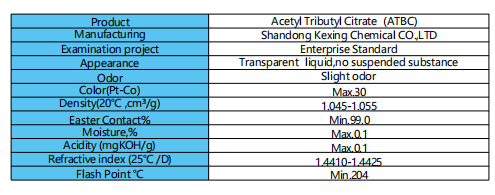
| ATBC | Acetyl tributyl citrate, non-phthalate plasticizer | Recorded comparison against DOTP: finished-PVC glass transition temperature approximately −60 °C, food and medical contact compliance, cost position higher than DOTP | Same commercial frame as above; stored sealed and not exposed long term above 150 °C | Match to the food or medical contact requirement before pricing |
Table note: comparison rows reflect documented facts only. Options without recorded performance data are shown as portfolio entries rather than as performance claims.
Buyer Checklist for Evaluating Each Option
- Function slot written in one sentence: lubrication, plasticization or co-stabilisation.
- Dosage or loading range recorded — 1% to 3% for the N-Butyl Stearate lubricant role.
- Purity specification agreed, for example the 99% purity Butyl Stearate grade.
- REACH position confirmed for CAS 123-95-5 and the 1 tonne per year registration threshold checked for EU imports.
- End-use compliance confirmed, including food and medical contact where required.
- Documented performance figures requested instead of assumed (for example glass transition temperature versus DOTP).
- Factory test report agreed in writing as the acceptance criterion.
- Certificate set verified: SGS, REACH, ISO 9001, ISO 14001, OHSAS 18001.
- Commercial frame confirmed: MOQ 1 tonne, FOB or CIF delivery, 30% deposit and 70% on the bill of lading.
- Cost-in-use calculated from dosage, not from price per kilogram alone.
- Storage and handling method defined: sealed storage, closed feeding, gas detection and regular tank and pipeline inspection.
- Named contact and document format fixed for repeat orders.
FAQ
1. Does N-Butyl Stearate require REACH registration for imports into the EU?
Butyl Stearate is listed under EU REACH with CAS number 123-95-5, and according to the European Chemicals Agency, registration is required for imports or manufacturing above 1 tonne per year. For the broader purchase file, the supplier's stated certificate set covers SGS, REACH, ISO 9001, ISO 14001 and OHSAS 18001. When a formulation changes to a plasticizer-range alternative such as DOP, DINP, DOTP, ESO, TEC, TBC or ATBC, the regulatory position of that specific option should be verified for the destination market before it is treated as an equivalent line item.
2. Can one supplier cover N-Butyl Stearate plus the plasticizer options in this comparison?
Yes — all eight products in this guide sit inside one manufacturer's range. Shandong Kexing Chemical Co., Ltd., founded in 2006 and based in Dongying, Shandong, China, lists N-Butyl Stearate alongside ATBC, TBC, TEC, ESO, DOTP, DINP, DPHP, DOP, DBP, DOA, DOS, DBS and 3G8, and states an annual output of 20,000 units with 200 employees and a 15-engineer R&D team. Exports account for 50% of its business, with Europe, the USA, Japan, South Korea and the Middle East named as main markets. Other manufacturers active in the global Butyl Stearate category, as named in third-party market research, include BASF SE, Emery Oleochemicals, Croda International and Fine Organics.
3. How do the purchasing terms and cost positions differ across these options?
The documented commercial mechanics are the same across the range: MOQ of 1 tonne, delivery on FOB or CIF terms, acceptance based on the factory test report, and payment of 30% deposit with 70% due upon receipt of the bill of lading. Cost position is driven by chemistry rather than by order mechanics — recorded comparison data places the non-phthalate ester option above DOTP on cost. Cost-in-use also differs structurally: N-Butyl Stearate works at a 1% to 3% dosage in its internal lubricant role, while plasticizer-range options are formulated at substantially higher loadings, so price per kilogram is not the same as price per finished compound.
4. How should a buyer validate a grade before committing to repeat volumes?
Agree the acceptance criteria in writing before the first order. For N-Butyl Stearate, the headline specification is a 99% purity grade used as a PVC internal lubricant and cosmetic emollient, and the documented acceptance basis is the factory test report. Keep the first accepted report as the reference for later lots, and check the certificate set (SGS, REACH, ISO 9001, ISO 14001, OHSAS 18001) in the same review. For liquid additive handling, the documented risk controls are closed feeding with sealed storage, supported by gas detection and regular tank and pipeline inspection.
5. What does a long-term N-Butyl Stearate supply arrangement look like for PVC lubricant formulations?
A stable arrangement fixes four things: the specification with its acceptance document (factory test report), the commercial frame (1 tonne MOQ, FOB or CIF delivery, 30% deposit and 70% on the bill of lading), the storage and handling method (sealed storage and closed feeding), and one named contact for repeat orders. Because the same manufacturer covers N-Butyl Stearate and the plasticizer options, documentation and purchasing can be consolidated instead of managed supplier by supplier; the group's export activity is handled by Dongying Kexing International Trade. A practical next step is to request the current specification sheet, certificate set and quotation for the grades you have shortlisted, or download the product brochure at Shandong Kexing Chemical product brochure. Contact: kexing@kexingchem.com or +86 177-5465-5267.
Conclusion: Decide the Slot First, Then the Supplier
The comparison between N-Butyl Stearate and DOP, DINP, DOTP, ESO, TEC, TBC and ATBC is not a performance contest. It is a decision about function, commercial terms and proof. N-Butyl Stearate covers the internal lubricant slot at a typical 1% to 3% dosage; the plasticizer-range options cover flexibility and processing behaviour at higher loadings; ESO is commonly used as a bio-based plasticizer and co-stabiliser.
Once the slot is fixed, the purchase itself becomes predictable: 1 tonne MOQ, FOB or CIF delivery, a factory test report as the acceptance criterion, 30% deposit with the balance on the bill of lading, and a defined storage method. Selecting a supplier that manufactures across the range turns those terms into a repeatable process rather than a new negotiation for every additive.
Next step for your formulation
Request the specification sheet, the certificate set and a quotation for N-Butyl Stearate and any plasticizer option on your shortlist, or download the catalogue before finalising the purchase order. Technical and commercial enquiries are handled directly by the export desk.
- Website: www.kexingchem.com
- Email: kexing@kexingchem.com
- Tel: +86 177-5465-5267
- WhatsApp: +86 18765463469
- Address: No.8 Houwang Road, Dawang Economic Development Zone, Guangrao County, Dongying City, Shandong Province, P.R. China
Have Questions or Need More Details?
Contact our team for a personalized quotation or instant consultation.
Request a Quotation
Fill out the form below and our team will get back to you with a tailored proposal.
WhatsApp Direct Chat
Prefer to chat in real-time? Message us on WhatsApp for instant assistance & quick answers.
- Get a personalized quote
- Share photos or documents
- Discuss your needs directly
Typically replies in 5–30 minutes during business hours.