Evaluating ATBC Suppliers: From Samples to Scale-Up Delivery
Acetyl Tributyl Citrate (ATBC, CAS 77-90-7) is a citrate-ester plasticizer used to soften PVC and other polymers in toys, food packaging film, medical products, artificial leather and inks. As a non-phthalate, bio-based plasticizer, ATBC has moved from a specialist choice to a mainstream one, and the number of suppliers claiming to produce it has grown accordingly.
Short answer: an ATBC supplier evaluation can be reduced to five gates — specification integrity, batch consistency evidence, production and R&D capability, citrate-ester portfolio control, and documentation plus packaging logistics. A sample closes the first two gates only. The remaining three decide whether the supplier can repeat that sample at production volume, which is where most sourcing problems actually start.
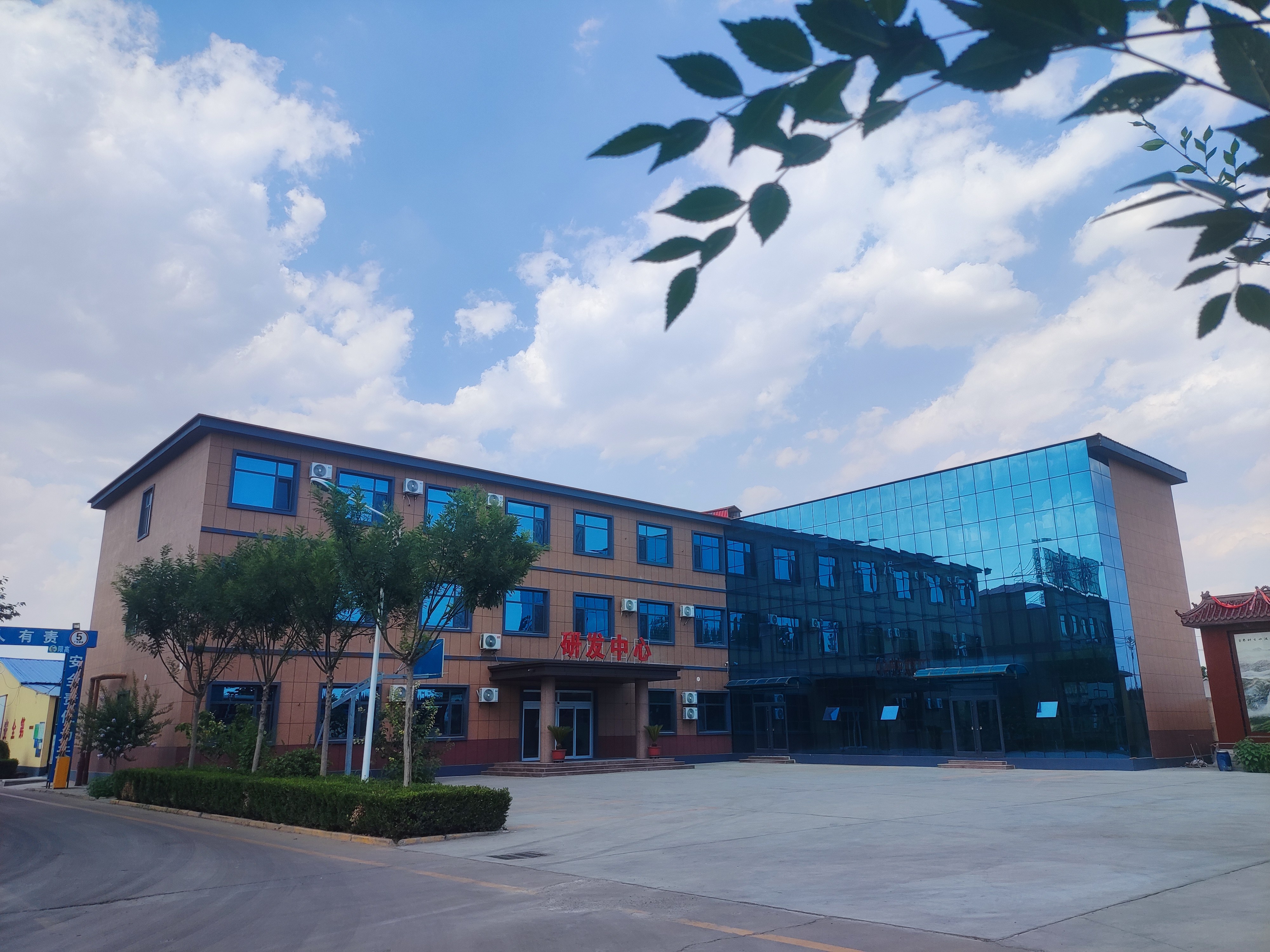
In-house R&D and analysis: the function that decides whether a sample can be repeated at production volume.
Why ATBC Evaluations Fail Between Sample and Scale-Up
ATBC has a short, comparable data sheet. Ester content, moisture, acidity, colour, density, refractive index and flash point are the parameters most buyers receive, and at a glance most suppliers look interchangeable. The catch is that these values describe a batch, not a production system. A sample that meets specification proves one lot was inside the limits; it does not prove the next twenty will be.
Samples are usually produced under favourable conditions: smaller reaction volumes, faster analysis turnaround, closer operator attention. Scale-up introduces different variables — raw-material lot variation, acetylation and purification control, drying and filtration efficiency, storage humidity and drum-handling practice. The two parameters that most often move in the wrong direction across a scale-up are moisture and acidity, with colour acting as the visible early warning.
For the applications where ATBC is deliberately chosen, drift is rarely cosmetic. Food packaging film, children’s toys, medical plastics, artificial leather and inks all combine a non-phthalate compliance position with a migration or low-temperature performance requirement. Where a formulation has been qualified around a specific plasticizer behaviour, a shift in purity or moisture changes the processing window, the surface finish or the flexibility at low temperature. The technical requirement is consistent across these uses: stable purity, controlled moisture, a defined shelf life, and compliance with local chemical regulations such as REACH, RoHS or food-grade certification where the end use demands it.
The framework below treats supplier evaluation as a sequence of gates, each closed with a specific piece of evidence — not as a single judgement about price, sample quality or reputation.
ATBC Market and Regulatory Context in 2026
ATBC demand is expanding within the wider shift away from phthalate plasticizers. The global ATBC market was estimated at USD 258.92 million in 2025 and is projected to reach USD 439.46 million by 2034 (Data Insights Reports). Global consumption in 2025 is estimated at 128,000 metric tons, with medical applications accounting for 34% of that volume and food packaging 29%.
Market-size estimates differ by source because the scope differs. Other published figures put the 2025 base lower — around USD 130 million (Business Research Insights), or USD 221 million when the wider citrate plasticizer category is measured (Intel Market Research). Buyers should read any single number as a scope statement: ATBC alone, citrate esters as a family, and plasticizers as a whole are three different markets with three different growth stories.
The regulatory position is more concrete. ATBC (CAS 77-90-7) is listed by the U.S. Food and Drug Administration as a food additive and flavouring adjuvant under 21 CFR 172.515, 175.105, 178.3910 and 181.27. That is a substance-level listing; it does not automatically clear every finished article in every market, so compliance work returns to the buyer’s own product, end use and destination.
Supply is concentrated at the top and fragmented below it. Jungbunzlauer is estimated to hold around 18% of the global ATBC market and Mitsubishi Chemical Corporation around 14% (Data Insights Reports). The remainder is served by a much wider field of producers, which is where most new supplier evaluations take place — and where the difference between a good sample and a reliable supply relationship is decided.
A Five-Gate Framework for Evaluating ATBC Suppliers
Each gate has one purpose and one piece of evidence that closes it. The gates are sequential: there is little value in negotiating volume terms with a supplier that cannot hold moisture and acidity across batches.
Gate 1 — Specification integrity: agree the numbers before the sample
ATBC is frequently supplied against a company (enterprise) standard rather than a single harmonised international grade, so the first question is not “what is your purity?” but “which parameters do you measure, at which temperature, and by which method?” A published ATBC specification provides a usable reference baseline: appearance a transparent liquid with no suspended substance; slight odour; colour (Pt-Co) maximum 30; density at 20 °C of 1.045–1.055; ester content minimum 99.0%; moisture maximum 0.1%; acidity maximum 0.1 mgKOH/g; refractive index at 25 °C of 1.4410–1.4425; and flash point minimum 204 °C.
Two suppliers can both “meet” a specification while testing at different temperatures or reporting colour on different instruments. Fixing the method before the sample arrives removes the most common cause of later disputes about whether a batch passed.
Gate 2 — Batch consistency evidence: read the spread, not the pass mark
Ask for the certificates of analysis (CoA) of three to six recent production lots of the same grade, and look at the distribution rather than the pass/fail result. A lot at 0.098% moisture and a lot at 0.02% both satisfy a 0.1% ceiling, but only the second shows a process with margin. Moisture and acidity are the sensitive parameters in ATBC; colour is the fastest signal that the purification step is under control.
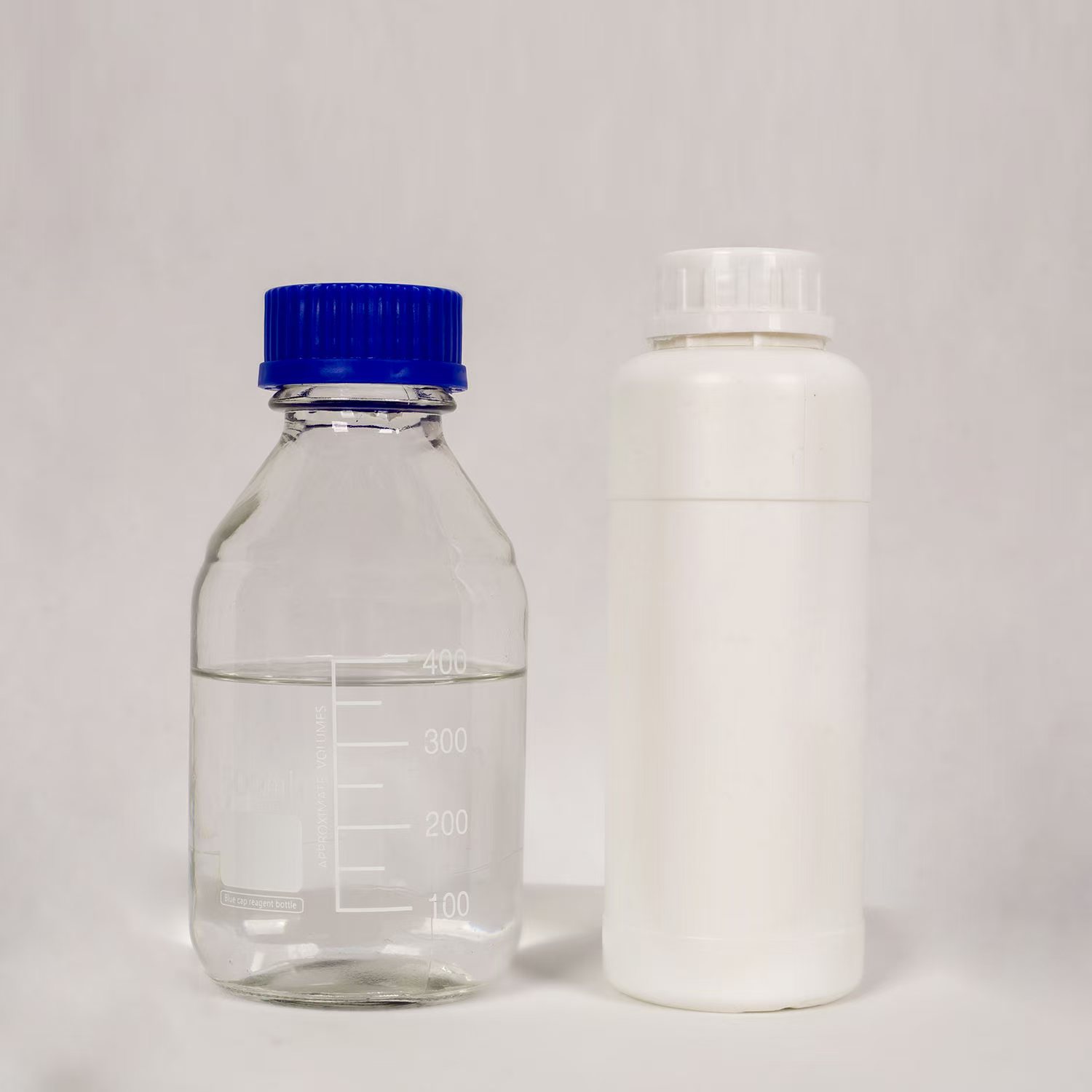
Acetyl Tributyl Citrate (ATBC, CAS 77-90-7): a transparent liquid with no suspended substance and a slight odour — the appearance check is the first step of any sample review.
Gate 3 — Production and R&D capability: structural facts over marketing claims
Supplier capability is not an adjective. It is a set of verifiable structural facts: founding year, plant location, workforce, output, R&D headcount and the organisation that handles export. Shandong Kexing Chemical Co., Ltd. is a manufacturer of plasticizers, plastic and rubber flame retardants and plastic additives based in Dongying, Shandong Province, China, founded in 2006. Company information lists around 200 employees, a production site of 666 m², a declared annual output of 20,000 units and a 15-engineer R&D team that cooperates with universities. Its subsidiary, Dongying Kexing International Trade, handles global import and export, and roughly 50% of output is exported, with Europe, the USA, Japan, South Korea and the Middle East as the main markets.
For a buyer, these are the facts that predict whether a sample request becomes a repeat supply relationship: who runs the process, who analyses it, and who documents it.
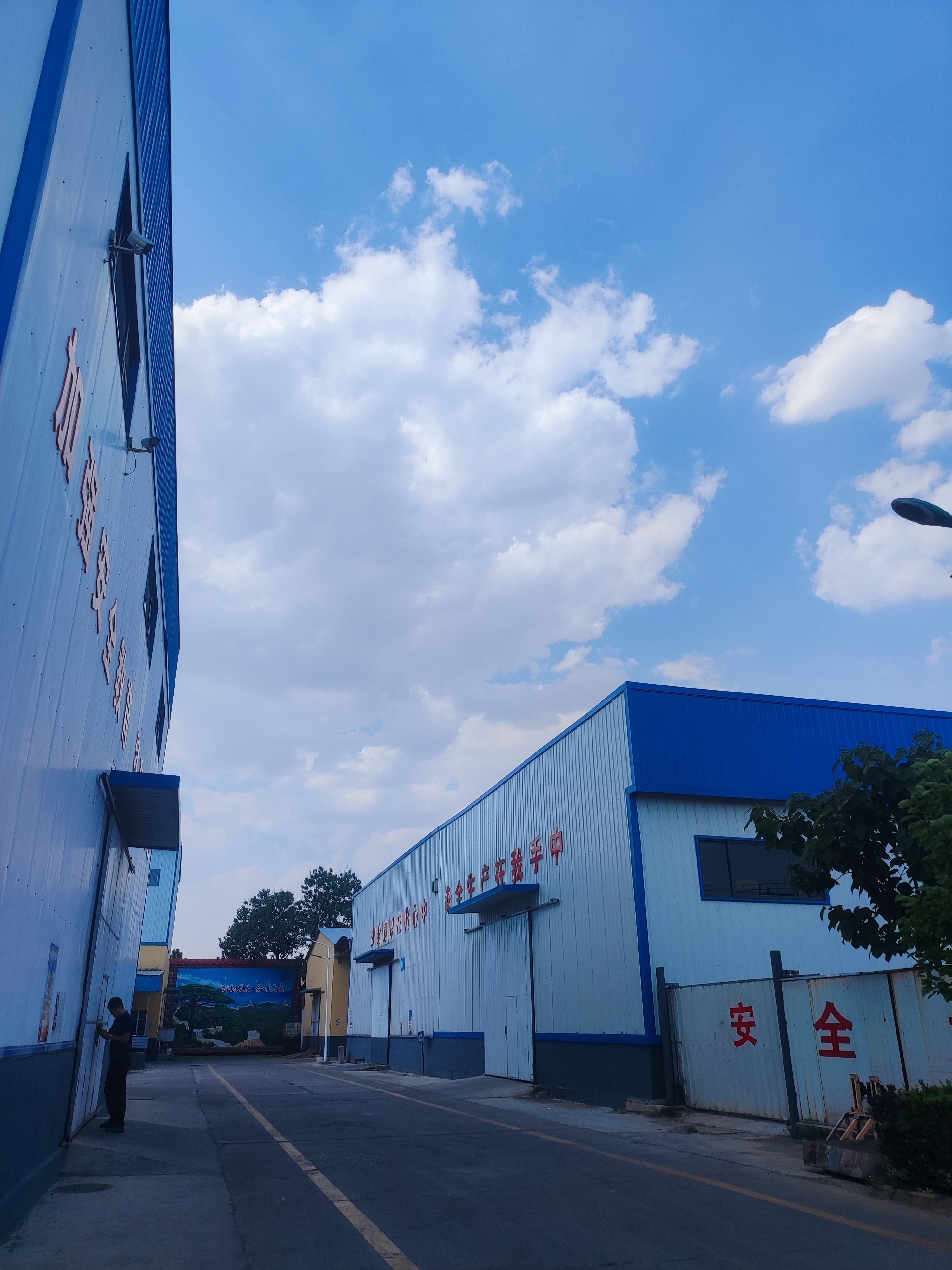
Production site check: a plant visit or a documented site review is what converts a supplier statement into evidence.
Gate 4 — Citrate-ester portfolio control: the cross-check most buyers miss
Does the supplier make only ATBC, or the citrate ester family? ATBC, Tributyl Citrate (TBC, CAS 77-94-1) and Triethyl Citrate (TEC, CAS 77-93-0) share a production logic: esterification of citric acid with the corresponding alcohol, followed by acetylation in the case of ATBC. A supplier running all three in-house must control the same reaction steps across different alcohol systems — a more demanding test of process discipline than a single product line. The same logic extends to the wider ester portfolio: Dioctyl Terephthalate (DOTP), Dioctyl Adipate (DOA), Dioctyl Sebacate (DOS), Dibutyl Sebacate (DBS), Epoxidized Soybean Oil (ESO), Triethylene Glycol Di-2-ethylhexoate (3G8) and N-Butyl Stearate, alongside the phthalate esters DINP, DPHP, DOP and DBP.
Portfolio breadth is not the objective in itself. It is a proxy for whether the supplier can hold a consistent citrate-ester profile while running other chemistry on the same site, with the same quality system and the same raw-material controls.
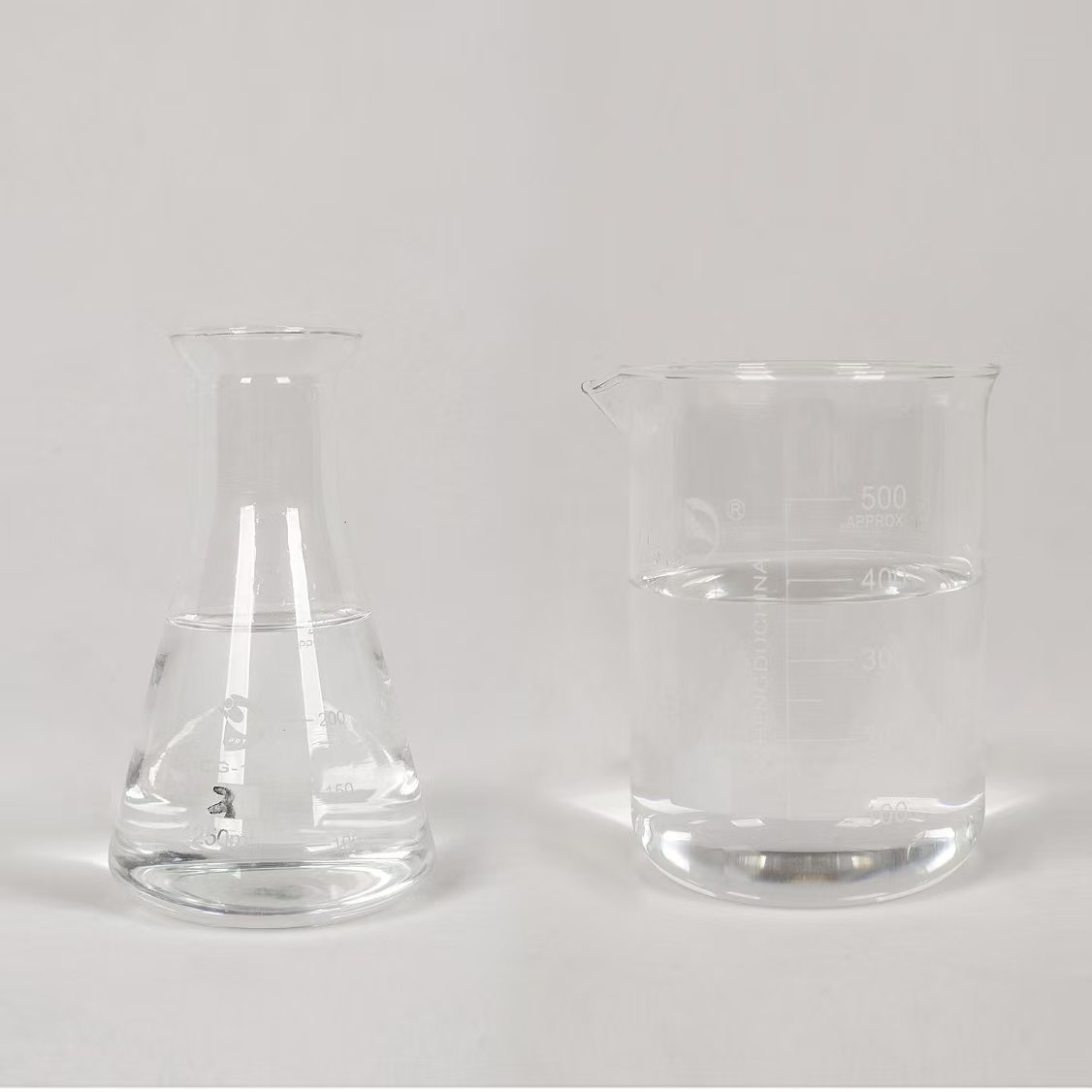
Tributyl Citrate (TBC, CAS 77-94-1): parallel control of the un-acetylated citrate ester is one indicator that esterification is stable, not batch-dependent.
Gate 5 — Documentation, packaging and scale-up logistics
The last gate covers everything around the liquid: certificates and their scope, the safety data sheet, the packaging format and the logistics path from plant to factory. Shandong Kexing Chemical Co., Ltd. states that its plasticizer range is certified to SGS, REACH, ISO 9001, ISO 14001 and OHSAS 18001. The evaluation question is not whether certificates exist, but whether their scope covers the grade, the packaging format and the destination market you are buying for.
Packaging belongs in the specification conversation, not in the final quotation. Ask explicitly which formats the supplier can commit to — 200 kg iron drums, IBC tote tanks, or bulk industrial ATBC raw liquid — and how the format affects handling, documentation and the first trial. Bulk transfer is often competitive per kilogram and the wrong choice for a first validation run.
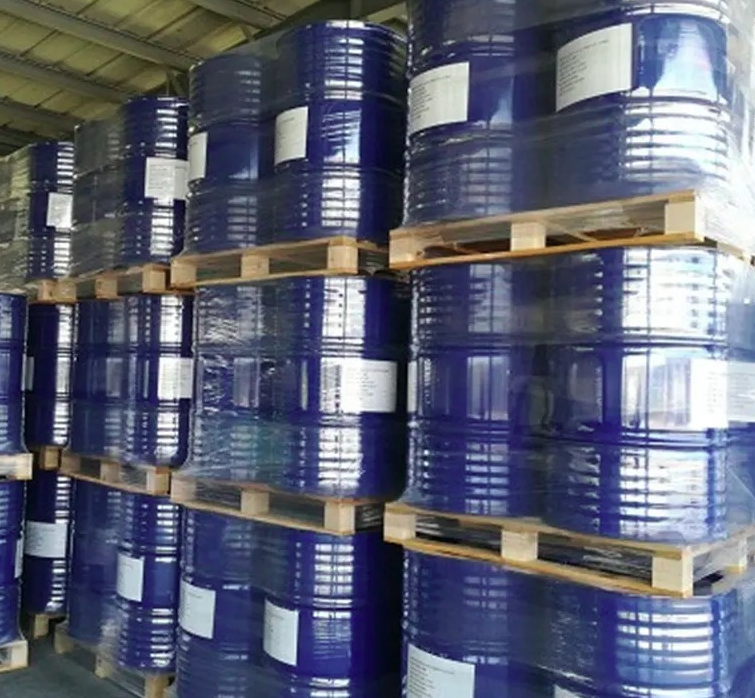
Packaging is a technical variable: drum, IBC tote and bulk formats each change sampling, handling and documentation.
Comparison Table: Citrate Ester Parameters to Verify
The table below lists the published parameters of the three citrate esters covered in this article. The values come from the supplier’s company (enterprise) standard; the ATBC column is the reference specification most buyers should request before sampling.
| Parameter | ATBC (CAS 77-90-7) | TBC (CAS 77-94-1) | TEC (CAS 77-93-0) |
|---|---|---|---|
| Appearance | Transparent liquid, no suspended substance | Transparent liquid, no suspended substance | Transparent liquid, no suspended substance |
| Odour | Slight | Slight | Slight |
| Colour (Pt-Co) | Max. 30 | Max. 30 | Max. 30 |
| Density (20 °C) | 1.045–1.055 g/cm³ | 1.037–1.047 g/cm³ | 1.135–1.139 g/cm³ |
| Ester content / purity | Min. 99.0% | Min. 99.0% | Purity min. 99.0% |
| Moisture | Max. 0.1% | Max. 0.1% | Max. 0.25% |
| Acidity (mgKOH/g) | Max. 0.1 | Max. 0.1 | Max. 0.1 |
| Refractive index | 1.4410–1.4425 (25 °C/D) | 1.443–1.446 (25 °C/D) | Not published in the source specification |
| Flash point | Min. 204 °C | Min. 185 °C | Min. 155 °C |
Read the table as a consistency test rather than a ranking. Where two products share a 0.1% moisture ceiling and all three share a 0.1 mgKOH/g acidity ceiling, the useful question is whether the supplier’s recent CoAs cluster near the middle of the range or sit just inside the limit. That single observation predicts scale-up behaviour better than any product brochure.
| Gate | Evidence to request | What closes the gate |
|---|---|---|
| 1. Specification integrity | Enterprise standard, test methods, temperature basis | A written test method agreed for every parameter |
| 2. Batch consistency | Three to six consecutive CoAs, same grade | Narrow spread in moisture, acidity and colour |
| 3. Production and R&D | Plant location, workforce, output, R&D headcount | Verifiable site and process ownership |
| 4. Citrate-ester control | List of in-house esters (ATBC, TBC, TEC and others) | Parallel production under one quality system |
| 5. Documentation and logistics | Certificates (SGS, REACH, ISO 9001, ISO 14001, OHSAS 18001), SDS, packaging formats | Scope covers your grade, market and packaging |
Step-by-Step: From Sample Request to Scale-Up Delivery
- Write the specification you will judge against. Convert the supplier’s data sheet into an internal acceptance document: parameter, limit, method, temperature, and the maximum deviation permitted between the sample and the first production lot. For ATBC, that means ester content minimum 99.0%, moisture maximum 0.1%, acidity maximum 0.1 mgKOH/g, colour maximum 30 Pt-Co, density 1.045–1.055 at 20 °C, refractive index 1.4410–1.4425 at 25 °C and flash point minimum 204 °C.
- Request the sample with its paperwork. Ask for the safety data sheet, the CoA of the sampled lot and the certificate set at the same time. Confirm CAS 77-90-7 and the grade name on each document. A sample that arrives without a lot-specific CoA cannot be compared with the production batch later.
- Check basic identity on arrival. Appearance should be a transparent liquid with no suspended substance and only a slight odour. Cloudiness, sediment or an unusual odour justify a repeat sample before any formulation work begins.
- Test it in your own formulation, at your own dosage. ATBC softens and toughens, lowers the melting point for easier processing, improves ductility and flow, and keeps flexibility at low temperature. Compare the sample against your incumbent plasticizer on the same equipment — high-speed mixers, kneaders, extruders, calenders or coating machines — because performance in a beaker is not performance under shear and heat history.
- Score the documentation. Check the scope of each certificate against your market and end use, not merely its existence.
- Order a production-scale lot and compare CoAs directly. The deviation between sample and first production batch is the single most useful scale-up signal. Record the comparison in writing, parameter by parameter.
- Fix packaging and logistics before price negotiation. Choose the format — 200 kg iron drum, IBC tote tank or bulk liquid — and confirm how it is documented on shipping papers. For export orders, confirm which entity contracts, invoices and ships.
- Define the deviation rule. Before the second order, agree in writing what happens if a batch falls outside the moisture, acidity, ester content or colour limits: replacement, credit or a pre-approved blending instruction. Scale-up surprises are commercial problems as much as technical ones, and the time to settle them is before they occur.
Where the Framework Matters Most: ATBC Use Cases
- Food packaging film — the highest regulatory exposure of any ATBC application, and 29% of estimated global consumption. Gate 1 and Gate 5 matter most: the FDA listing under 21 CFR 172.515, 175.105, 178.3910 and 181.27 applies to the substance, so the finished film still has to satisfy the destination market’s food-contact rules.
- Medical plastics — around 34% of estimated consumption. Documentation depth per shipment and change control dominate; a supplier that cannot supply a lot-specific CoA is difficult to qualify here.
- Children’s toys and childcare articles — a non-phthalate positioning decision. Verify that the grade tested is the grade shipped, and that REACH and RoHS scope covers the article, not just the raw material.
- Artificial leather and coated fabrics — calendering and coating lines run at high throughput, so colour and moisture consistency (Gate 2) show up directly in surface finish and scrap rates.
- Inks and coatings — compatibility and low odour drive the selection; Gate 1 method agreement prevents disagreements over odour and colour limits.
- Low-temperature and flexible PVC products — cold and flex resistance is the reason ATBC is specified. Validate the sample at your service temperature, not at room temperature only.
FAQ: Evaluating Acetyl Tributyl Citrate Suppliers
Is ATBC compliant for food-contact and medical applications?
ATBC (CAS 77-90-7) is listed by the U.S. FDA as a food additive and flavouring agent adjuvant under 21 CFR 172.515, 175.105, 178.3910 and 181.27. That is a substance-level listing and does not automatically clear every finished article in every market. Shandong Kexing Chemical Co., Ltd. states that its plasticizer range is certified to SGS, REACH, ISO 9001, ISO 14001 and OHSAS 18001. For food packaging film, toys or medical PVC, ask for the certificate scope and confirm it covers the exact grade, packaging format and destination market you are buying for.
How can I tell an ATBC manufacturer from a trading company?
Ask what the supplier produces in-house beyond ATBC. A manufacturer that runs the citrate ester family — Tributyl Citrate (TBC, CAS 77-94-1) and Triethyl Citrate (TEC, CAS 77-93-0) alongside Acetyl Tributyl Citrate — must control esterification and acetylation across several alcohol systems, which is difficult to sustain with purchased material. Supporting evidence includes plant location, founding year, workforce, R&D headcount and the export organisation. Shandong Kexing Chemical Co., Ltd., founded in 2006 and based in Dongying, Shandong Province, China, lists around 200 employees, a 15-engineer R&D team and the export subsidiary Dongying Kexing International Trade.
How should ATBC quotations be compared?
Compare quotations on an identical basis: the same specification and test method, the same packaging format, the same batch size and the same delivery terms. A per-kilogram figure on its own hides differences in drum or IBC handling, documentation and the specification margin the supplier is actually offering. Ask what changes between a sample quantity, an IBC tote tank and a bulk industrial ATBC shipment, and ask which documents accompany each shipment.
What should I verify on an ATBC sample before approving volume?
Confirm CAS 77-90-7 and the grade on the label, safety data sheet and lot CoA. Appearance should be a transparent liquid with no suspended substance and a slight odour. Then run the sample in your own formulation, at your own dosage, on your own equipment, and check the functions that matter for your product: softening and toughening, lower processing temperature, ductility, flow and low-temperature flexibility. Retain a sample of the tested lot so it can be compared, parameter by parameter, with the first production delivery.
How do I move from a sample to scale-up delivery without surprises?
Close the packaging, documentation and deviation questions before the first bulk order. Agree the format — 200 kg iron drum, IBC tote tank or bulk liquid — and the batch schedule; require a CoA with every shipment; and write a deviation rule covering moisture, acidity, ester content and colour. Shandong Kexing Chemical Co., Ltd. exports roughly 50% of its output to markets including Europe, the USA, Japan, South Korea and the Middle East, and handles export orders through Dongying Kexing International Trade. Buyers who want to benchmark a specification can request a sample or a quotation by email at kexing@kexingchem.com, through WhatsApp at +86 18765463469, or via the company website at www.kexingchem.com.
Conclusion: Close the Gates Before You Close the Order
A reliable ATBC supplier is not the one with the best-looking sample or the lowest first quote. It is the one whose specification method you can agree on, whose recent CoAs show margin rather than pass marks, whose plant, R&D team and export organisation can be verified, whose citrate ester family is produced under one quality system, and whose packaging and documentation can carry your order from a drum to a container without changing character.
Used in sequence, the five gates convert an ATBC sourcing decision from a judgement about impressions into a documented process — and give you a written basis for the second order, which is where supply relationships are really tested.
Next step: benchmark your ATBC specification against a real production lot. Request a sample, a lot-specific CoA or a quotation from Shandong Kexing Chemical Co., Ltd.
Email: kexing@kexingchem.com | Tel: +86 177-5465-5267 | WhatsApp: +86 18765463469
Website: www.kexingchem.com | Chat on WhatsApp
Download the product brochure: Kexing Chemical product catalogue (PDF)

Have Questions or Need More Details?
Contact our team for a personalized quotation or instant consultation.
Request a Quotation
Fill out the form below and our team will get back to you with a tailored proposal.
WhatsApp Direct Chat
Prefer to chat in real-time? Message us on WhatsApp for instant assistance & quick answers.
- Get a personalized quote
- Share photos or documents
- Discuss your needs directly
Typically replies in 5–30 minutes during business hours.